Space Science Results Land Alongside a Launch Wave: What the Newest Data Shows
A University of Copenhagen study published on 28 September found signs of protein fermentation in blood samples from 52 astronauts who flew long stays on the International Space Station, offering a possible explanation for a complaint NASA crews have logged for years: constipation in microgravity.
 Sofia MarchettiScience and health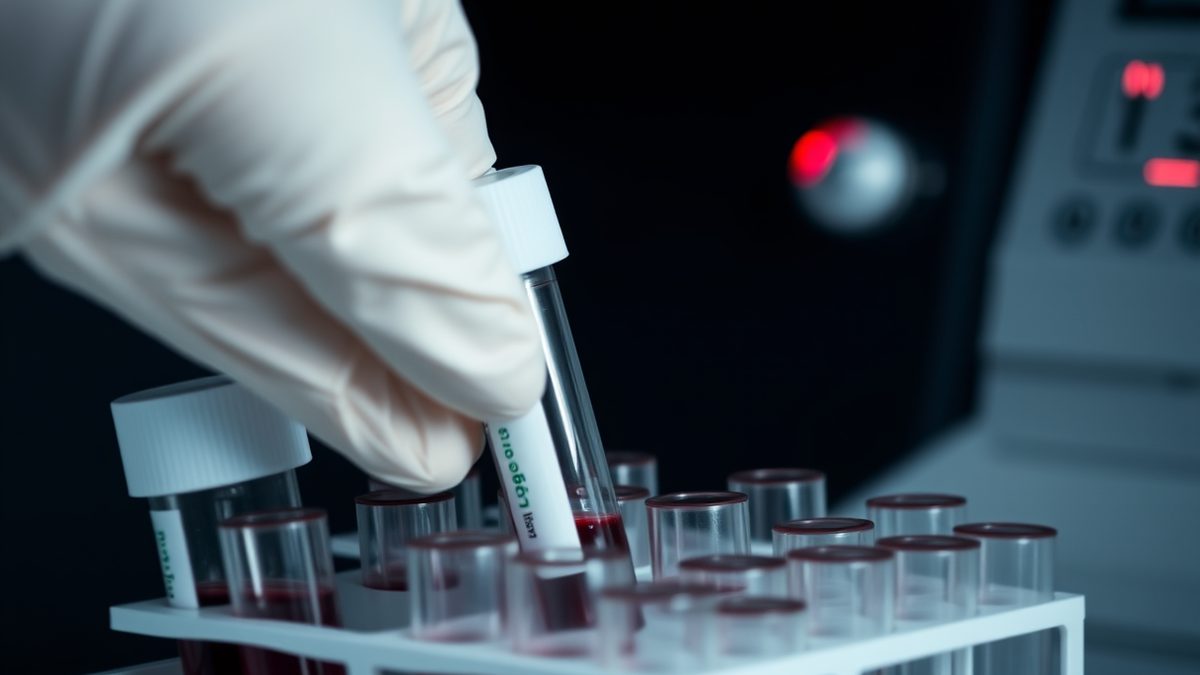
The finding, run with NASA and released by ScienceDaily on 28 September, is the newest peer-reviewed science result in this week's pile of space news. It is also the only one in the dossier that comes from blood samples rather than press releases about rockets.
Researchers looked at metabolites, small molecules circulating in the bloodstream, from 52 astronauts who spent months aboard the ISS. Joint first author Giorgia La Barbera, an associate professor at the University of Copenhagen's Department of Nutrition, Exercise and Sports, said the samples show gut bacteria "begin to ferment protein to a greater extent than usual within weeks after the astronauts arrive in space, and this change continues until they are back on Earth." Protein fermentation happens when intestinal bacteria run out of dietary fibre and switch to breaking down protein instead.
The suspected cause is mechanical, not chemical. Co-author Henrik Roager said the lack of gravity probably slows food moving through the intestine, giving bacteria more time to ferment protein. That would fit the constipation pattern crews report.
It is not a trivial quality-of-life issue. Senior author Lars Ove Dragsted said protein fermentation products are often associated with kidney damage, effects on mood and reduced ability to focus. Long-duration missions to the Moon and Mars are the reason the question matters: crews on those trips would spend far longer away from Earth's gravity than current ISS rotations.
Launches crowd the same week
The science result arrived in the middle of a dense launch window. NASASpaceFlight reported on 29 September that four orbital launches were expected in the week, all on SpaceX Falcon 9 and Falcon Heavy vehicles, with every mission featuring a return-to-launch-site landing.
Crew-13 was scheduled to lift off from Space Launch Complex 40 at Cape Canaveral on Thursday, 1 October, at 11:10 AM EDT with an instantaneous window, carrying NASA commander Jessica Watkins, pilot Luke Delaney, Canadian Space Agency astronaut Joshua Kutryk and Roscosmos cosmonaut Sergey Teteryatnikov. NASASpaceFlight reported the Dragon would dock to the Harmony forward port at 8:00 PM EDT the same day and that the mission would be Falcon 9's 109th flight of 2026 and 692nd overall. The same preview put a second Falcon 9 at Vandenberg's SLC-4E with a one-hour window opening at 11:18 AM PDT to deliver 130 rideshare payloads to sun-synchronous orbit.
That Vandenberg rideshare is Transporter-18, and it carries more than small satellites. CNBC reported on 1 October that the mission would loft Google tensor processing units inside Planet Labs satellites, the first in-orbit test of Alphabet's Project Suncatcher. Alphabet said low Earth orbit offers near-constant sunlight and up to eight times more solar power than on Earth, and that it is exploring whether space could one day host scalable machine learning infrastructure. CNBC also noted Alphabet's stake in SpaceX is valued at over $82 billion.
The same launch is a customer test for a much smaller company. TechCrunch reported on 1 October that Satlyt, founded by former Google and SpaceX product manager Rama Afullo, raised an $8 million seed round and is flying its software on a spacecraft built by Indian startup TakeMe2Space. Three customers are involved: NASA, which is paying to test cloud computing protocols in space; Stellerian, working on image processing for space surveillance; and TakeMe2Space itself. Satlyt previously ran Google DeepMind's Gemma model onboard a Momentus spacecraft, where it cut the size of a transmission about onboard software errors by more than 60%, according to TechCrunch.
Hardware companies raise and hire
Money kept moving in the background. Endpoints News reported on 30 September that Varda raised a $251 million Series D to advance pharmaceutical manufacturing in space. Tech.eu reported the same day that Lithuania's Blackswan Space closed a €2.5 million round led by Iron Wolf Capital, bringing total funding to €3.2 million, to fly its autonomous rendezvous and proximity operations payload in 2027.
Quantum Space said on 30 September it had executed a spacecraft processing work order with All Points Logistics for its Prime pathfinder mission, targeting launch in the second half of 2027 from Vandenberg Space Force Base. SpaceNews carried the announcement, including a quote from Quantum Space president Kerry Wisnosky that securing launch-site processing is part of mitigating execution risk.
"We need to identify the components we are still buying from the U.S. or from China and see what we can do in Europe so that we can have control ov"
That concern about supply chains is not limited to launch vehicles. EE Times reported on 1 October that ESA's Kate Underhill, speaking at a Budapest press event, said space systems typically operate "at least 10 years behind consumer electronics" and described an order for 20 laser diodes from a German supplier that required a minimum of 10,000 units. Underhill also said any U.S. component on a satellite triggers ITAR compliance obligations.
Not every result this week was about hardware. Microsoft Research published an account on 30 September of a machine learning pipeline that forecasts space-weather risk for 66,935 substations in the continental United States, combining solar-wind observations with AE and Dst index forecasts, local geology and grid data. The system detected nearly 80% of major space-weather events during its evaluation period and can warn operators 30 to 60 minutes before a specific risk appears.
Elsewhere, Ars Technica reported on 30 September that Roscosmos chief Dmitry Bakanov said parachute drop tests for Russia's long-delayed crewed spacecraft would begin this fall, with officials holding to a debut crewed launch in 2028 or 2029, likely on an Angara A5M. Ars Technica noted it is unclear whether the tests will use real flight hardware, boilerplate vehicles or mockups.
The clearest lesson from the week is uneven progress. A gut-microbiome study with 52 subjects and a forecast model covering 66,935 substations are both finished work with numbers attached. Orbital data centres, by contrast, remain a promise: at the AI Infra Summit on 17 September, Viasat chief data and AI officer Sumeet Singh said launch costs of $2,500 to $3,000 per kilogram would need to fall to roughly $200 to $500 for orbital data centres to make financial sense, and US Air Force CIO Deepak Sachdeva said the best approach for now is a proof of concept.
World Space Week opens on 4 October across 100 nations under the theme "Rocket Revolution", according to the World Space Week Association. The association said last year's edition drew 50,000 events in 102 countries. For all the launch activity, the science in this dossier still depends on samples, sensors and time.
Sources
12- 01Blood tests reveal why astronauts get constipated in spaceEN
- 02Launch Preview: Crew-13 to head to ISS, Falcon Heavy mission for the NROEN
- 03SpaceX set to launch Google AI chips into orbit in push toward space-based data centersEN
- 04Satlyt, founded by a former Google and SpaceX product manager, raises $8M to run AI on satellitesEN
- 05Varda gets $251M to make medicines in space, a long-sought area for drugsEN
- 06Blackswan Space raises €2.5M to take autonomous spacecraft navigation into orbitEN
- 07Quantum Space Executes Launch Processing Agreement with All Points Logistics for Prime MissionEN
- 08Europe's Space Industry Seeks Greater Supply Chain ControlEN
- 09Forecasting space weather risks on power gridsEN
- 10So what's happening with Russia's new, long-delayed crewed spacecraft?EN
- 11Space Data Centers Inch Toward Reality, With CaveatsEN
- 12World Space Week 2026 Celebrates the "Rocket Revolution"EN
All figures and quotations in this text come from the sources listed below.
Content prepared by the editorial team with AI assistance.
Sofia Marchetti
Comments
0- No comments yet — be the first.