Tessalia: Europe's advanced chip packaging starts in Bordeaux
Foxconn, Radiall and Thales have laid the foundation stone of a plant in Le Barp, near Bordeaux. At full capacity it will turn out more than 50 million components a year, covering a stage of the supply chain Europe barely controlled.
 Rachel NwosuAI, models and technology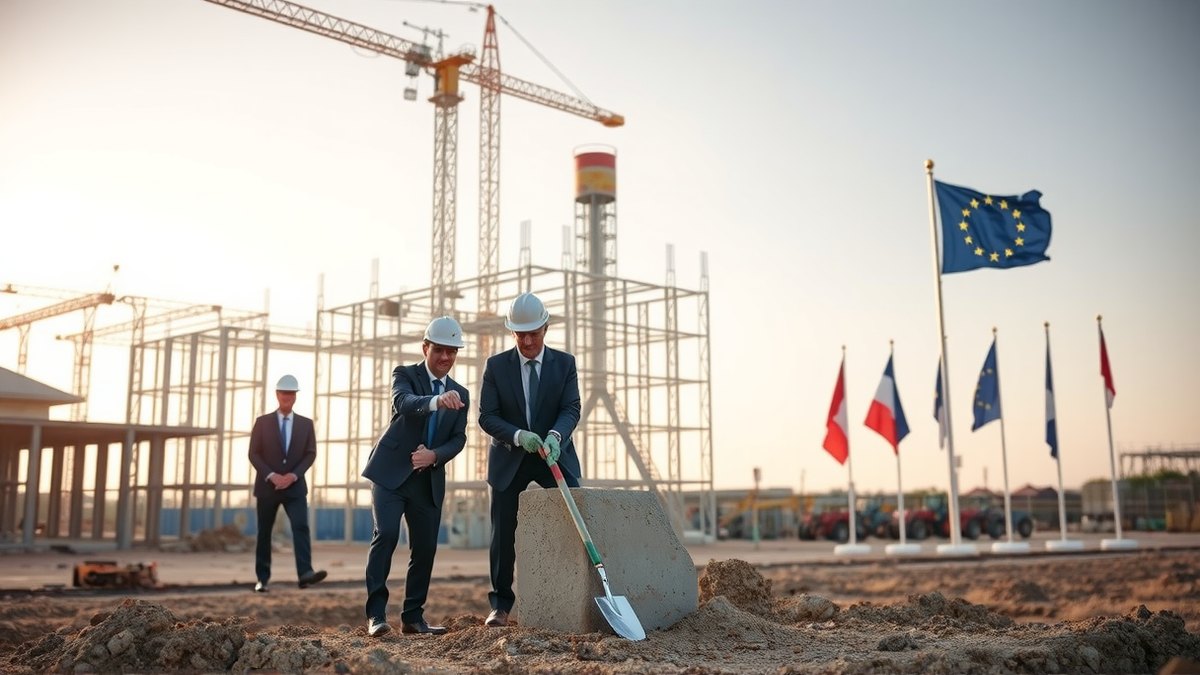
Advanced semiconductor packaging is the step where several chips are integrated into a single system. Europe barely covered it at all. The Tessalia joint venture, set up by Foxconn, Radiall and Thales in Le Barp, near Bordeaux, is the latest attempt to fill that gap.
What the plant will do
The site was presented at the Choose France 2025 summit and is now under construction along the Route des Lasers. At full capacity it aims to produce more than 50 million components a year. It will specialise in Systems in Package modules for applications that cannot tolerate errors, from defence to space and telecommunications. The name is a technical reference: a tessella is a single element of a mosaic.
The move follows the European chips regulation, which funded front-end plants but put fewer resources into the final stage of the supply chain, where the added value of the most advanced components is determined. For Edison, Italy has a potentially interesting position in packaging and assembly. A dedicated European hub reduces dependence on Asia for a process that is today almost entirely non-European.
The race for technological sovereignty
The new plant sits in a broader picture, in which AI has returned to the centre of industrial policy. Cloud, language models, energy consumption, advanced microchips and hyperscale data centres are the infrastructure on which a continent's ability to govern innovation is measured. The analysis by the Institute for International Political Studies cited by CorCom recalls that when computing capacity becomes scarce and expensive, whoever controls its distribution largely controls the trajectories of innovation. This is why the European Union is building its own AI Gigafactories and supporting the manufacturing of components.
The timing remains to be verified. A packaging plant requires specialised equipment, trained staff and a supplier chain that does not yet exist in Nouvelle-Aquitaine. The concrete risk is that production capacity reaches the market when the price cycle for components has already changed direction.
The international context leaves no room for waiting. The same analysis notes that the United States uses control of computing capacity as a lever of industrial policy, and that China integrates state and companies in infrastructure decisions. To avoid remaining a spectator, Europe must have continental production capacity, not only rules.
Sources
2- 01CorCom — Chip made in Europe: via all'impianto da 50 milioni di componenti l'annoIT
- 02CorCom — Sovranità digitale: corsa all'AI di StatoIT
All figures and quotations in this text come from the sources listed below.
Content prepared by the editorial team with AI assistance.
Rachel Nwosu
Comments
0- No comments yet — be the first.