Semiconductors for Europe: geopolitical risk turns structural
A survey of 55 experts from industry, research and government names the two biggest threats to Europe's chip supply chain: restricted access to essential manufacturing inputs and a military conflict over Taiwan.
 Rachel NwosuAI, models and technology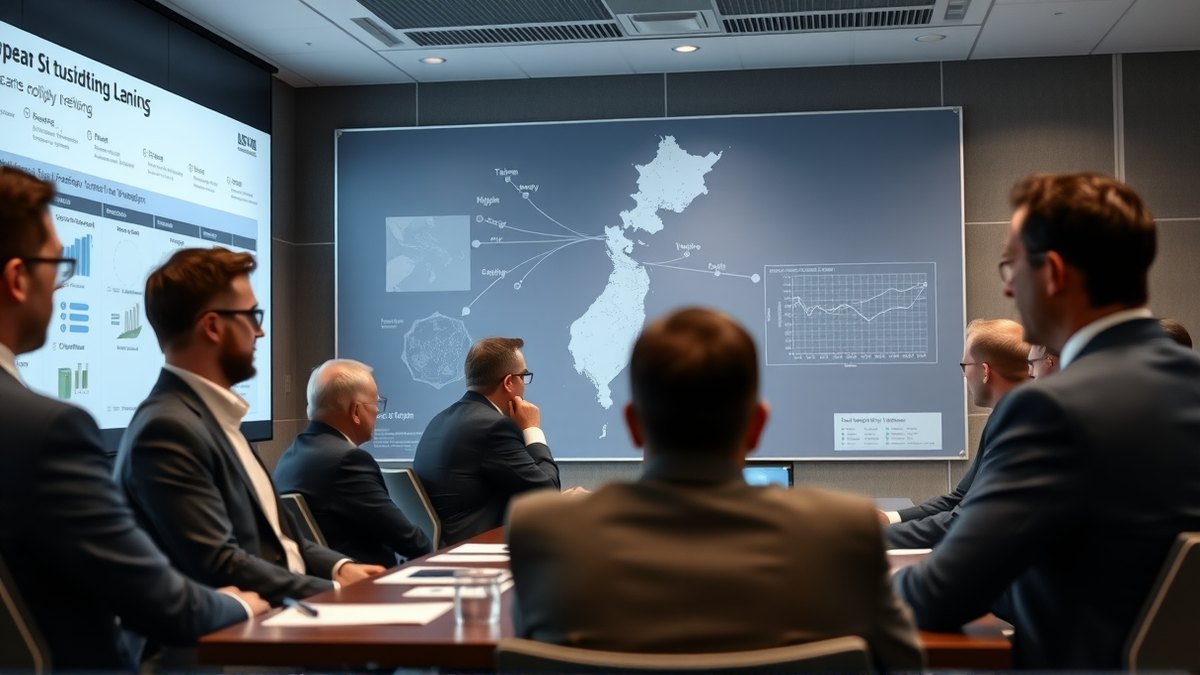
After the supply crisis of 2020-2022, Europe understood that semiconductors are a security matter, not just an industrial policy one. The EU Semiconductor Geopolitical Risk Survey: Outlook for 2026-2031 came out in July 2026. Analysts Joris Teer (Euiss) and Pierre Sel (Institut Montaigne) ran it under the Chips Diplomacy Support Initiative. They asked 55 people across industry, research, government and think tanks how much work remains.
The two threats at the top
Respondents put restricted access to essential manufacturing inputs first. A military conflict over Taiwan comes next. The two scenarios differ in nature but converge in effect: both hit Europe's ability to manufacture, not just to buy. The authors conclude that European vulnerability has not been resolved, only made more visible. They call for selective diplomatic alliances, monitoring capacity and regular stress tests, not the illusion of autarky.
The international investment picture confirms that production capacity is what is at stake. In South Korea, SK Hynix and Samsung plan a memory and semiconductor cluster in the Honam region. The park covers about 8.26 million square metres, of which 2.08 million are available immediately. Site preparation should start in 2027, energy and water supplies should be complete by the end of 2028, and the first production batch should come online in June 2030. Samsung has moved the first batch of the Yongin complex forward to October 2029. In the same weeks, Intel chief executive Lip-Bu Tan recalled that Intel remains among TSMC's top ten customers. No one, he said, can cover the entire supply chain alone.
What it means for Italian industry
For Italy's manufacturing system the message is operational. Companies that depend on long-cycle components, such as industrial automation, automotive, professional electronics and telecommunications, must treat semiconductor availability as a risk to manage with strategic stockpiles, dual suppliers and contract visibility. It is not a problem to solve when the order is placed.
Then there is the European dimension. The survey suggests that chip policy must come with anticipatory tools: geopolitical risk observatories, joint exercises between companies and governments, and coordination with Asian and North American partners that goes beyond trade. Without this forecasting capacity, investments in new plants risk arriving when the scenario has already changed.
"Dependence cannot be eliminated: it is managed with alliances, transparency and continuous monitoring" is the report's central argument.
Sources
3- 01CorCom — Semiconduttori per l'Europa: il rischio geopolitico diventa strutturaleIT
- 02IT之家 — Cluser Honam di SK Hynix e Samsung (terreni, energia, primo lotto 2030)ZH
- 03IT之家 — Intel resta tra i primi dieci clienti di TSMC (dichiarazioni Lip-Bu Tan)ZH
All figures and quotations in this text come from the sources listed below.
Content prepared by the editorial team with AI assistance.
Rachel Nwosu
Comments
0- No comments yet — be the first.