The AI chip squeeze moves to memory: 1% allocations, $4,000 HBM, slow new capacity
Oracle has cancelled a $7 billion chip leasing deal with Tencent, the Financial Times reported, after US officials raised concerns about the agreement. The same day, Bloomberg reported that Chinese AI firms which ordered about 6 million Nvidia RTX Pro 5500 chips expect to receive roughly 1% of them within four months.
 Grace OkonkwoAI, models and technology
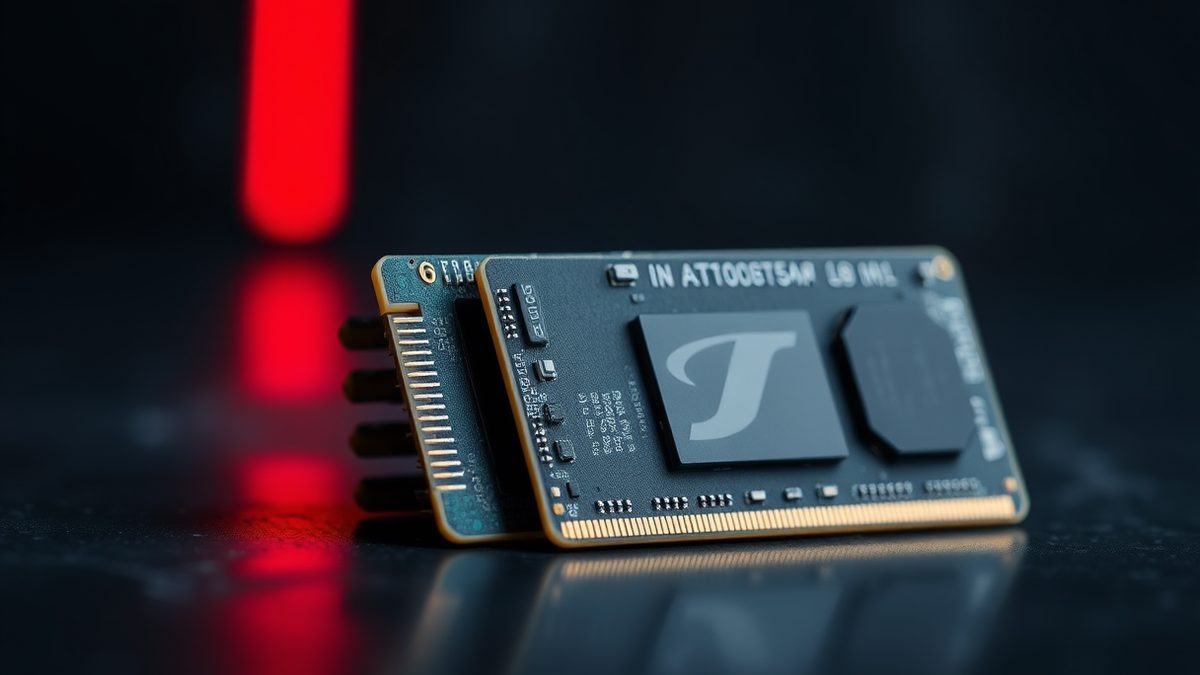
One percent of the order book
Alibaba, Tencent, ByteDance and other Chinese AI and cloud companies have together ordered about 6 million Nvidia RTX Pro 5500 chips, Bloomberg reported, citing people familiar with the matter. They expect only some tens of thousands within the next four months, roughly 1% of the order. That changes planning for anyone buying AI compute in China. Budgets are being written against a fraction of the hardware ordered, and nobody has said how the split will be decided. Neither Nvidia nor the Chinese buyers have published an allocation rule.
The FT reported last month that Oracle had signed a five-year agreement to lease 100,000 chips to Tencent, the Chinese firm's largest ever overseas deal. US officials told Oracle of their concerns about the Tencent deal, the FT said, citing two people familiar with the matter. Tencent did not immediately respond to a request for comment.
Huawei sends buyers to the grey market
Huawei is telling some customers to source the memory for its AI chips themselves, The Information reported. Its Ascend 960DT is due to launch early next year. Samsung and SK hynix together control more than 80% of the global HBM market, and US export rules block direct purchases from them. Smugglers fill the gap by bundling HBM with cheap server processors that sit below the export threshold. The packages go through Hong Kong, and workshops in Shenzhen separate the memory from the boards. Tom's Hardware, citing The Information, described a smuggler whose chip design firm builds the low-performing processors that carry the memory past the controls. The work is fragile. The failure rate is high, but the margin covers it.
A Shenzhen broker told The Information that a single HBM3E unit changed hands in China for several hundred dollars a year ago and now sells for about $4,000. Each AI chip needs six to eight of those units, putting the memory alone at $24,000 to $32,000 per GPU.
Enforcement is tightening. South Korea's customs authority had uncovered trade violations worth $560 million by May, already above the previous full-year record. A third of that involved strategic goods such as chips exported without proper authorization or with false declarations.
Apple pays the bill at the other end
At the consumer end, Apple is absorbing the same pressure. Chief executive John Ternus told a conference call on Monday that memory pricing is "unprecedented" and predicted that memory costs in the fourth quarter of this year would be even higher than in the previous three months. Apple's revenue rose 12% to $114.5bn from $102.5bn. Shares still fell 2.75% in after-hours trading after the margin warning. Ternus said price rises on iPad and MacBook in June, followed by iPhone in September, had provided some offset.
Capacity is coming, slowly
New capacity is being announced, but on a calendar that does not match the shortage. Bosch said it will move its semiconductor business into a dedicated division from January 2028 and targets around €5bn in annual chip revenue by 2030. The unit stays inside Bosch rather than becoming a separate company. Bosch has invested about €3bn in its wafer plants in Dresden and Reutlingen and is spending around $2bn converting its Roseville, California site to silicon carbide production. Bosch also plans to sell capacity to outside customers. Its target markets are robotics, factory automation and AI data centres.
Sahasra Semiconductors' plant in Bhiwadi, Rajasthan, was backed by more than ₹1.5 billion, about $15.8 million, and has a stated annual packaging capacity of 60 million units. Tata Electronics' ₹270 billion (about $3.25 billion) OSAT facility in Assam has an approved capacity of 48 million units a day.
China's memory champion is closer to the problem. CXMT has begun risk production of HBM3E and is expected to mass produce it by the end of this year. It reportedly suffers from low yield, which makes its chips expensive to produce and procure.
What to watch
Bosch's Erik Rein said the dedicated unit opens "a new chapter in our more than 60-year semiconductor history". Whether outside customers sign up will decide if the foundry plan adds supply or just another option on paper. Huawei has reportedly said its next flagship AI processor, the 960DT, would deliver similar performance to the H100. It cannot buy HBM from Samsung or SK hynix, and Chinese memory makers lack the capacity to supply all its chip demands. That keeps its customers in the grey market.
The thing to watch is enforcement, not announcements. Arrests have already included Super Micro executives, and Taiwan and Malaysia have stepped up anti-smuggling work. The smuggler fears South Korean and US authorities will clamp down on the operations soon.
Sources
23- 01Oracle Scraps $7 Billion Deal to Lease Chips to Tencent, FT SaysEN
- 02Nvidia China Clients to Get 1% of $70 Billion RTX Chips OrderedEN
- 03Bosch gives chips their own division, eyeing €5bn in sales by 2030EN
- 04AI chip smugglers exploit trade control loophole to bring banned HBM from South Korea into ChinaEN
- 05Huawei tells customers to find their own AI chip memory, effectively outsourcing procurement to the black marketEN
- 06Apple warns of 'unprecedented' rise in memory chip pricesEN
- 07Is There Room for Small-Scale OSATs in India's Chip Packaging Boom?EN
- 08 New 'Star Trek: The Original Voyages' book traces the stellar legacy of the bold sci-fi brand EN
- 09Chainstack Reports Production Systems Breach Exposing Customer Data and Password HashesEN
- 10Barracuda Flaws Could Be Chained to Bypass Authorization and Gain Root AccessEN
- 11AI’s Expansion Hits the Limits of Local PowerEN
- 12Marvell Snaps Photonics Chipmaker Lumentum to Bolster AI ConnectivityEN
- 13Li Auto launches 2026 i6 with unchanged starting price, upgraded in-house chip and batteryEN
- 14China’s CXMT defends bet on risky new DRAM architecture to circumvent US chip curbsEN
- 15Chainalysis Confirms Intrusion Into Internal Tools and Exposure of Customer Identity DataEN
- 16As AI cyber risks grow, Chinese chip expert urges shared ethics standards with US rivalsEN
- 17ESI supplying solar array components to missile defense programsEN
- 18AI, fuelled by advanced chips, set to power semiconductor manufacturing: industry veteranEN
- 19Chinese AI chipmaker Iluvatar CoreX says new GPU matches Nvidia’s H200 as chip gap closesEN
- 20Oracle Cloud to Offer Google TPUs and New AI ChipsEN
- 21Huawei’s Tau Scaling Law roll-out reaches base stations in blow to US chip curbsEN
- 22South Korea urged to guard chip profitability as China’s CXMT and YMTC gain market shareEN
- 23Possible Roberts Road Expansion as SpaceX pushes for Flight 16EN
All figures and quotations in this text come from the sources listed below.
Content prepared by the editorial team with AI assistance.
Grace Okonkwo
Comments
0- No comments yet — be the first.