US watchdog cites NJ data center in scrutiny of on-site gas power for AI
New Jersey's $1.07 million penalty against a Vineland AI data center that ran 62 unpermitted natural gas generators is now being read as a warning for the whole industry, according to Data Center Knowledge, which reported the case on 30 September.
 Rachel NwosuAI, models and technology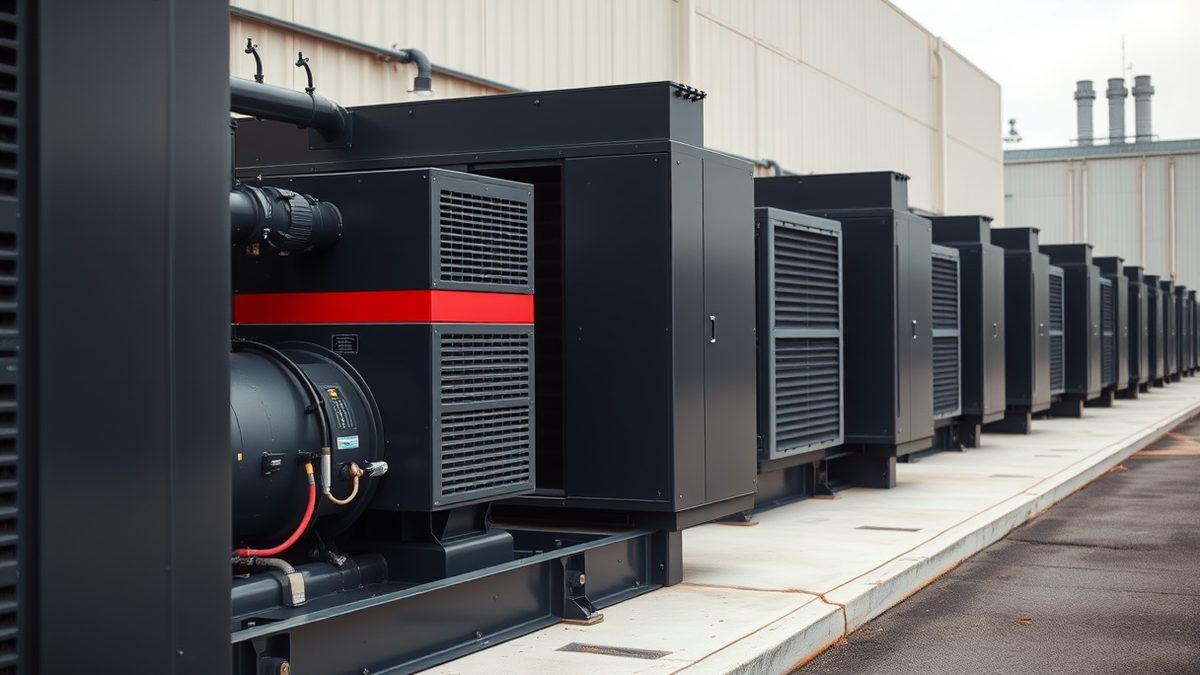
The New Jersey Department of Environmental Protection said the operator, identified as DataOne, installed and operated 62 natural gas generators without the required permits. A state official announced the enforcement action on 22 September. DataOne disputed the department's determination on the temporary generators, according to the New Jersey Monitor as cited by Data Center Knowledge, while saying it would apply for air permits and stay in contact with regulators.
That single case matters because it is the template. As AI buildouts outrun grid connections, operators are putting generation behind the meter. The pollution and noise move to the neighbourhood rather than disappearing.
Behind the meter is not a free pass
"AI data centers are increasingly becoming power plants as well as computing facilities," Abhijit Sunil, a senior analyst at Forrester, told Data Center Knowledge. He added that AI infrastructure "can now be deployed faster than traditional permitting and inspection processes were designed to oversee." The same piece quotes him saying: "Taking pressure off the grid doesn't eliminate an environmental cost."
Taking pressure off the grid doesn't eliminate an environmental cost.
For residents the relevant effects are combustion pollutants such as NOx, CO and particulate matter, plus continuous or frequent noise, the report notes. Sunil's recommendation is an assessment covering electricity consumption, grid upgrades, water, land, emissions and noise, weighed against the project's economic benefits. That is a materially wider list than the one most project reviews use, and it lands on operators who have spent years arguing that behind-the-meter generation is a private matter between a company and its equipment vendors.
Texas is where the fight is sharpest. Inside Climate News reported on 30 September that administrative law judges at the Public Utilities Commission of Texas released a proposed decision on Wednesday in El Paso Electric's application to build a 366-megawatt natural gas plant, the McCloud facility, to serve Meta's $10 billion, 1-gigawatt data center in northeast El Paso.
The judges found the utility failed to adequately consider alternatives and failed to issue a request for proposals to contractors. They recommended approval only on the condition that El Paso Electric does not pass capital and operating costs to ratepayers. Without that condition, they recommend denial. The five commissioners have not scheduled a vote.
The detail is awkward for the utility. El Paso Electric initially claimed solar would supply the site, then applied in December to build a plant of 813 modular natural gas generators from contractor Enchanted Rock, each rated at 450 kilowatts, at an estimated total cost of $499 million. The utility proposed Enchanted Rock after Meta recommended the company and did not consider other contractors, the judges found, and it ran no cost-benefit analysis on whether gas was the cost-effective option. The judges wrote that Wurldwide, a Meta subsidiary named in the application, "drove the process."
El Paso Electric did not respond in the Inside Climate News account. Meta did not comment there either. Verónica Carbajal of the Sembrando Esperanza Coalition, which submitted more than 1,000 comments opposing the application, told the outlet: "We're disappointed. If the state was really serious about this, the commission would be denying everything related to data centers."
Missouri plans 5,400 MW of new gas
On 29 September, Ameren Missouri filed a long-range energy plan with the Missouri Public Service Commission that would raise fossil reliance, according to CleanTechnica. The filing plans 5,400 MW of new gas by 2032, an increase of 1,700 MW, delays the Sioux coal closure to 2035 and two Labadie units by six years to 2042, cuts pre-2030 solar by 900 MW to 1,300 MW, and eliminates new wind before 2030 while reducing total wind by 500 MW. Ameren also dropped its carbon dioxide reduction goal from the plan's promotional materials.
Jenn DeRose of the Sierra Club's Beyond Coal campaign in Missouri said the utility "is still digging with its pollution-heavy plan even though it admits extreme weather events are increasing." The Sierra Club also notes Ameren's stated position that it does not consider public health impacts of the generation it builds, or fugitive methane from gas extraction and transport.
Europe's problem is disclosure. Lighthouse Reports filed a complaint on Monday with the European Commission under the Aarhus Convention, arguing the EU has built a "wall of silence" around data center energy and water use, POLITICO reported on 30 September. The Commission's own figures put Europe's data centers at 20.7 terawatt-hours of electricity and more than 8 million cubic meters of water in 2025, up 26% and 52% on 2024, but the totals come from incomplete data and are published only in aggregate.
Under a 2024 law, Brussels and EU capitals are barred from disclosing information and key performance indicators for individual data centers. The Commission did not respond to POLITICO's request for comment. It presented a transparency label last week, with minimum performance standards expected to follow.
National reporting tells the same story. NL Times reported on 30 September that fewer than a quarter of larger Dutch data centers publish electricity and drinking water figures. The Dutch Datacenter Association counted 186 commercial sites of at least 500 kW at the end of last year; the Netherlands Enterprise Agency, which collects the data for the EU, holds records on 104 of them, with public figures for the electricity use of 44 and the water use of 47. Statistics Netherlands puts Dutch data center electricity use at 5.1 billion kWh in 2024, or 4.6% of national consumption, and grid operator TenneT projects 10% to 15% by 2030.
The land underneath
Generation is also moving onto public land. NPR reported on 30 September that Valar Atomics has proposed Project Beehive on more than 9,000 acres of Bureau of Land Management land near Price, Utah, with some 456 small reactors producing about 9.6 gigawatts for data centers, plus fuel production and waste storage. For scale, Utah produces around 4 gigawatts on average, with summer peaks near 10 gigawatts. Non-nuclear construction could start by the end of this year, with the first reactors online in 2028.
The Bureau of Land Management's Utah office confirmed to NPR that it has the application and is reviewing it for completeness. Neal Clark of the Southern Utah Wilderness Alliance called the plan concerning; Lexi Tuddenham of the Healthy Environment Alliance of Utah said her main goal is awareness. The Salt Lake Tribune first reported the state-land portion of the project last week, while the larger federal footprint is reported by NPR from documents it reviewed.
The pattern across all of it is the same: the electricity gets closer to people, and the information about it gets further away.
Sources
10- 01Data Center On-Site Power Brings Pollution Risks Closer to HomeEN
- 02Texas Electric Utility Only Considered Gas to Power $10B Meta Data CenterEN
- 03Ameren Missouri Proposes Pollution-Heavy Future to Power Data CentersEN
- 04EU accused of hiding environmental impact of data centersEN
- 05Most data centers refusing to say how much water, electricity they useEN
- 06A startup wants to build a massive nuclear-powered data center on public land in UtahEN
- 07Digital Realty Plans Cable Landing Station at Los Angeles Data CenterEN
- 08Globe Telecom bets $1B on data centers as the Philippines positions for hyperscale boomEN
- 09Chinese firms trail global peers on profits, but AI power boom offers bright spot: NatixisEN
- 10Japan's fusion energy startup to begin power-on tests at pilot reactor in 2027EN
All figures and quotations in this text come from the sources listed below.
Content prepared by the editorial team with AI assistance.
Rachel Nwosu
Comments
0- No comments yet — be the first.