Wearables are rewiring sleep and health studies, but the evidence is uneven
A University of Texas at Austin team fitted 82 young adults with wrist-worn trackers and followed them for months. The participants who moved more entered REM sleep later. It is the latest sign that consumer wearables are pulling sleep and health research out of the lab, even as questions about accuracy and commercial incentives pile up.
 Sofia MarchettiScience and health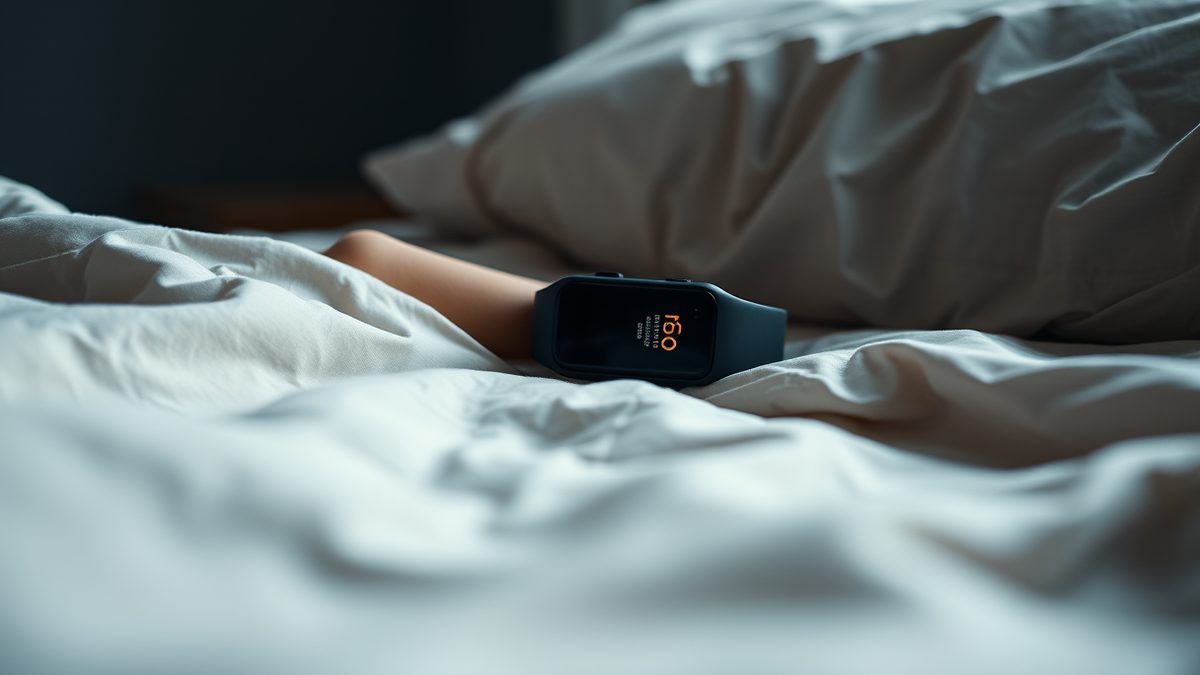
The study, published in Nature Scientific Reports, tracked 82 young adults with a wrist-worn activity tracker that logged movement and heart rate, plus a smartphone app for self-reported well-being. According to UT News, the researchers found that physical activity lengthened REM latency. That may mean exercise helps consolidate deeper sleep stages before the brain shifts into REM sleep.
That finding is not a rounding error in how sleep research gets done. For years, the standard method meant a night in a lab, wired to electrodes, and conclusions drawn from a single night. The UT team replicated several results from those lab studies. Among them: the link between low-intensity and moderate-to-vigorous activity and deeper sleep, and between better sleep and more energy and less stress the next morning. The difference was the setting: home, work and daily life, over weeks and months.
“You can learn a lot from lab studies, but obviously there are limitations to studying the sleep patterns of individual participants in just one night,” said Benjamin Baird, a research assistant professor of psychology and one of the authors, according to UT News. He added that researchers were able to address for the first time how differences in sleep architecture are associated with perceived well-being.
Sleep architecture is not a minor detail. It refers to the structure of each 90- to 120-minute sleep cycle: three stages of non-REM sleep and REM sleep, which makes up roughly the final 25% of each cycle. David M. Schnyer, a co-author and chair of the Department of Psychology, said the team showed that a standard Fitbit, not an expensive scientific device, was sensitive to these measures and produced predictive results. “The world is your oyster now,” he said, according to UT News.
The scale problem and the accuracy problem
Consumer sleep tracking has grown far beyond a single university cohort. ABC News reported on 24 September 2024 that less than ten years after the first sleep-tracking Apple Watch, the world is wired for the study of sleep, with researchers able to watch changes in sleep and health metrics at the scale of a city or a country. When a powerful earthquake hit New South Wales, data scientists in Sweden detected an above-average number of people briefly waking in the surrounding area, based on data from the sleep-tracking app Sleep Cycle.
Michael Gradisar, Sleep Cycle's head of science, told ABC News that sleep is one of the first things to go wrong in a person's health. “Sleep is the canary in the mine,” he said. The same article described how Sleep Cycle's data scientists saw an increase in night-time coughing in New York approximately one week before confirmed Omicron cases, which Gradisar called an early warning system.
But scale does not automatically mean precision. Gabriel Pires, a sleep researcher in Brazil, told ABC News that he and others started publishing papers warning that the new technologies did not work well. Mike Gradisar, then a professor of sleep science at Flinders University, was also sceptical before moving to the private sector.
Regulators have since blurred the line between consumer gadgets and clinical tools. In early 2024, Samsung's smart watch sleep apnoea detection system received approval from the US health regulator after an eight-month review, the first consumer smart watch to clear that hurdle. Apple's smart watch received the same regulatory approval earlier this month, according to ABC News.
Danny Eckert, director of the Adelaide Institute for Sleep Health at Flinders University, argued that consumer sleep tech could ultimately outperform the current gold standard for diagnosing sleep apnoea. A 2022 study he co-authored found that up to half of single-night diagnostic studies for sleep apnoea misclassify severity. “The single-night tests are hugely noisy and inaccurate,” he told ABC News. In-home monitoring, he said, allows clinicians to track sleep apnoea every night for weeks, months and years.
Who pays for the data, and who trusts it
The commercial incentives around wearable data are not limited to sleep. In September 2026, TechCrunch reported that hospitals' use of artificial intelligence tools when submitting insurance claims led to an additional $942 million in healthcare spending over a two-year period, according to an analysis by the Blue Cross Blue Shield Association. The analysis found a sharp increase in patients documented as having complex conditions. It argued there was a clear disconnect between medical coding and treatment, with no evidence of a corresponding change in care delivered.
That dispute is about billing, not sleep staging, but it shows how quickly health data generated by software becomes contested territory. The New York Times, cited by TechCrunch, described the AI coding fight as the latest sign that AI is contributing to rising healthcare costs. Dr. Shiv Rao, founder of AI startup Abridge, acknowledged the risk of what he called a horrible dystopic future, with bots fighting bots, though he said AI might also cut costs. Luke Chalker, a senior vice president at BCBSA, resisted the framing of a battle. “It's not a war. It's a completely one-sided blood bath,” he said, according to TechCrunch.
The geography of digital health research is shifting too. Rest of World reported on 24 September 2026 that in China, patients book hospital appointments through WeChat or Alipay, consult doctors on telemedicine platforms, and chat with AI avatars about insomnia and diabetes. The Chinese government has encouraged digital healthcare to reach the country's 1.4 billion people and address an urban-rural gap in care. Ruby Wang, a physician and consultant, told Rest of World that in the UK and US, tech is always an add-on to a rusty machine, while in China the digital rails are treated as normal infrastructure.
Wang also pointed to China's biotech momentum: more clinical trials are being conducted in China than in the US, and China now accounts for half of global drug licensing deals, according to Rest of World. She said China's share of global drug out-licensing deals could reach as much as 60% this year. Those numbers describe pharmaceuticals, not wearables, but they matter for digital health because drugs and devices increasingly share the same data pipelines and clinical trial infrastructure.
For the UT study, the immediate claim is narrower: a standard consumer tracker can capture sleep architecture measures that were once the preserve of a lab, and physical activity appears to shift how the sleep cycle unfolds. Whether that holds across broader populations, and whether the devices remain accurate enough for clinical decisions, is still being tested.
Sources
4- 01Study uses wearables to show that physical activity lengthens REM latencyEN
- 02Sleep-tracking devices are wiring the world for the study of sleepEN
- 03Insurers claim AI is already increasing healthcare costsEN
- 04China is excelling in health tech. That's good news for the worldEN
All figures and quotations in this text come from the sources listed below.
Content prepared by the editorial team with AI assistance.
Sofia Marchetti
Comments
0- No comments yet — be the first.