CATL starts trial cell production in Hungary as China bets on sodium
Trial runs have begun on two cell lines in Debrecen, and the plant is to reach 100 GWh. Changan and CATL, meanwhile, are pushing sodium batteries and battery swapping.
 Peter LindqvistSport, cars and travel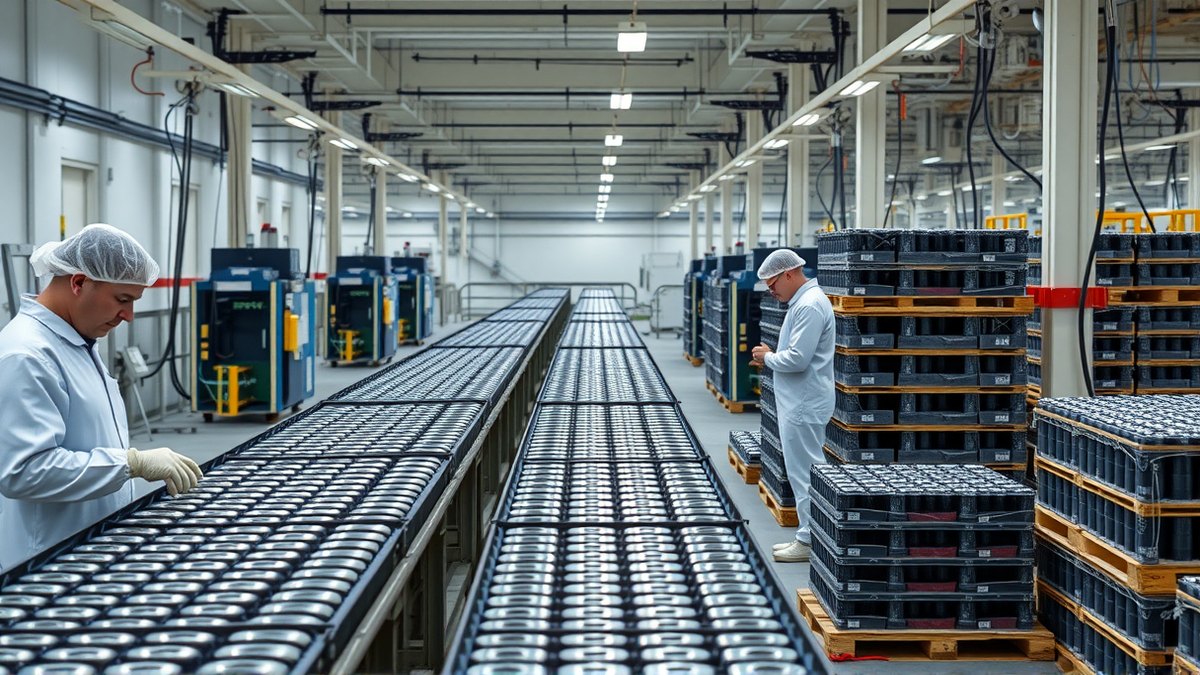
CATL began trial cell production at its plant in Debrecen, Hungary, on 22 September 2026. The first two lines are running trials to prepare equipment and validate the process before mass production, the Chinese battery group said. The plant is to reach 100 GWh and become CATL's largest production base outside China.
Timeline and permits
The factory won its occupancy permit in August, then the remaining approvals, including an IPPC (integrated pollution prevention and control) permit. Local authorities inspected the site repeatedly before issuing the occupancy permit. The checks were a response to residents who had objected to the investment earlier. CATL gave no date for the start of mass production.
Debrecen matters for a simple reason: cells made locally shorten the supply chain to European carmakers and cut dependence on shipments from China. For CATL it is also a reply to EU rules on local value added in electric vehicles and to tariff pressure on imported components.
Sodium instead of lithium
CATL's second track is sodium-ion batteries. Changan Automotive said in an investor-contacts report on 24 September 2026 that it had hit a stage milestone on sodium cells. It developed a single-point technology for high-power electrodes, which improves range in extreme temperatures. Changan is also deepening its work with CATL. The two firms have formally launched a joint battery-swapping project based on sodium technology (钠新换电) and are to develop a new battery system together.
CATL unveiled the Naxtra sodium battery (钠新) on 21 April 2025 as the world's first mass-produced product of its kind. The family covers cells for vehicle propulsion and a 24 V starter and power battery for trucks. Both are to operate from -40 to +70 degrees Celsius. In a model with a 2.95 m wheelbase, the sodium cell delivers more than 200 km of electric range in hybrids and more than 500 km in pure electric cars. That is meant to fix the drop in performance at very low temperatures.
For the European market the message is twofold. Lithium cells for mid-range and high-end cars will be made increasingly close to buyers. Sodium technology, cheaper and frost-resistant, is being developed as a complement to the offer rather than a replacement for long-range vehicles.
Sources
2- 01CATL begins trial cell production at planned 100 GWh Hungary plant (CnEVPost)EN
- 02长安汽车:深化与宁德时代合作,钠新换电技术项目立项 (IT之家)ZH
All figures and quotations in this text come from the sources listed below.
Content prepared by the editorial team with AI assistance.
Peter Lindqvist
Comments
0- No comments yet — be the first.