Data centres need $6tn a year by 2031, Bain says, as power and cooling bills mount
The AI industry must generate $6 trillion in annual revenue by 2031 to justify the capital being poured into data centres, according to a Bain and Company report published on Tuesday.
 Rachel NwosuAI, models and technology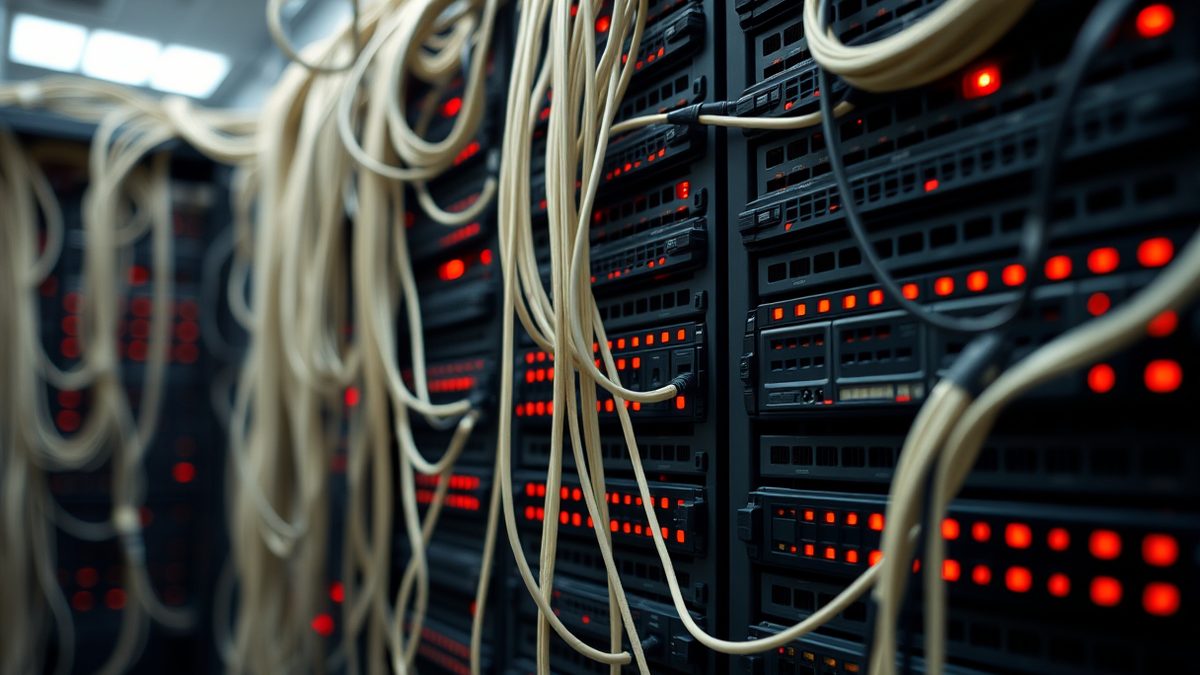
Bain puts the required AI infrastructure spend at up to $1.5 trillion a year by 2031. That covers new facilities, GPU upgrades, memory and networking gear. If capex runs at about a quarter of industry revenue, the consultancy argues, the market has to approach $6 trillion annually to carry it. The National reported the figures on 29 September.
Bain's lead author, David Crawford, framed the problem bluntly in the report: "The economics of AI infrastructure demand trillions in new revenue beyond productivity gains."
The physical side of that buildout is where the numbers get uncomfortable. Bain says the size and cost of AI data centres double roughly every 12 to 16 months. Epoch AI data cited in the report tracks Meta's Prometheus facility in Ohio: 600MW at an estimated $24 billion in 2025, projected to reach 2GW and $80 billion by 2027, 5GW and up to $175 billion by 2029, and 9GW at $200 billion by 2030. Power and cooling are the bottlenecks. Bain lists grid capacity, GPU supply, a skilled workforce and public pushback over resource use and noise pollution among the constraints. A larger cheque does not resolve any of them.
Where the electricity might come from is already a live political question. CBC News reported on 29 September that Newfoundland and Labrador's energy minister, Lloyd Parrott, has said the province's "door is open for business" to data centre developers, with excess Churchill Falls power floated as a possible supply. A department spokesperson confirmed the government has been approached by companies, but declined to discuss specific proponents.
Not everyone in the province is convinced. TechNL chief executive Andrea King told CBC that Labrador meets several criteria developers want, including low-carbon hydro, cold weather and land, but warned the opportunity cost matters. "Does this make sense?" she asked, adding that the decision needs deeper scrutiny. Tech journalist Paris Marx, author of Hyperscale, asked whether handing that power to data centres is the best use of it.
Vermont offers a different model for the demand side. The BBC reported on 29 September that Green Mountain Power's virtual power plant, built from home batteries leased to customers, has become the state's largest single source of power, with more than 5,500 households enrolled. The US has over 40GW of virtual power plant capacity, according to internal analysis by Wood Mackenzie, against roughly 600GW of natural gas and 200GW of coal.
On the intake side, Datadog described in a 29 September post on Antithesis's blog how its Event Platform handles more than 100 trillion events a day. Its Intake team is moving from a stateless HTTP architecture to a stateful one to cut the volume of data transmitted. Senior staff engineer Joy Zhang said the team expected stateful encoding to reduce both transmission and processing load. Bain's forecast is a projection, not a settled outcome, and the report itself notes governments in the UAE, Saudi Arabia, the EU, South Korea and the US are backing the buildout. Whether the revenue arrives is the open question.
Sources
4- 01AI needs $6tn in annual revenue to justify data centre boom, Bain saysEN
- 02AI data centres in N.L.? The door is 'open for business,' says energy ministerEN
- 03The US state replacing power plants with home batteriesEN
- 04Testing Datadog's Next-Generation Event Platform Intake with AntithesisEN
All figures and quotations in this text come from the sources listed below.
Content prepared by the editorial team with AI assistance.
Rachel Nwosu
Comments
0- No comments yet — be the first.