Los Angeles has the first AI art museum. A model is the curator
DATALAND on Grand Avenue in Los Angeles calls itself the world's first museum of art made by artificial intelligence. The project belongs to Turkish-American new media artist Refik Anadol.
 Naomi FeldmanCulture, food and lifestyle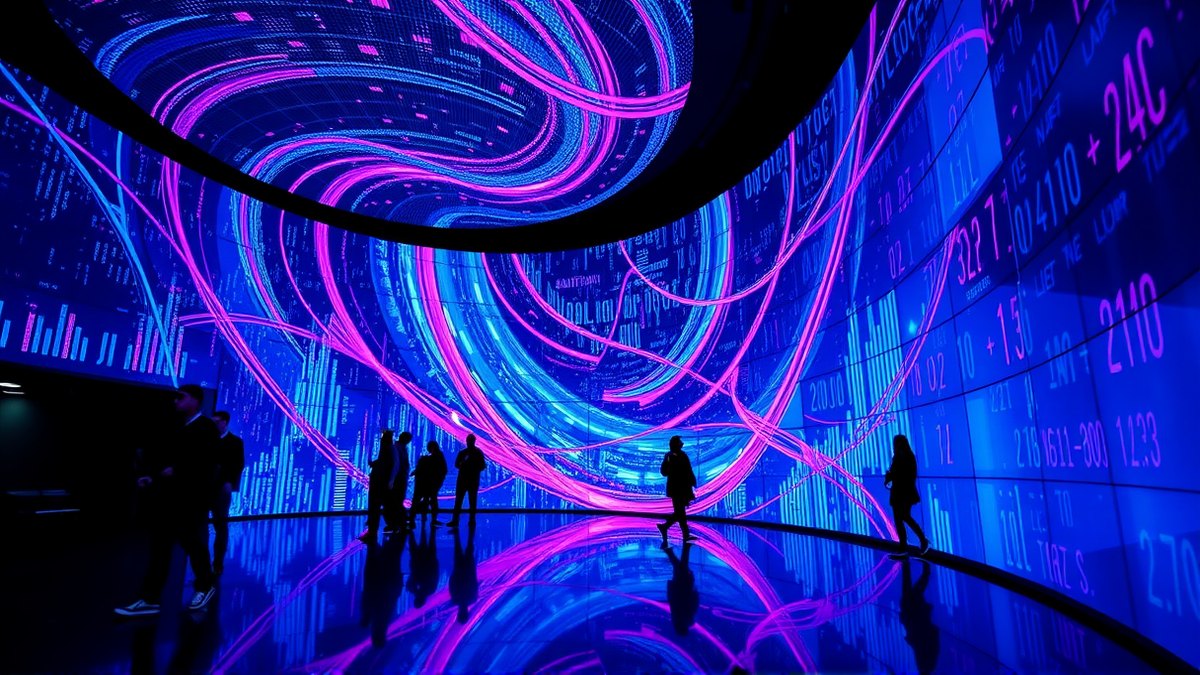
DATALAND occupies a building at 100 South Grand Avenue in downtown Los Angeles. The venue calls itself the world's first museum of AI art and a digital ecosystem where human imagination meets the creative potential of machines. It holds five multisensory galleries and opens Tuesday through Sunday. Its founders say they are exploring a new kind of cultural institution, one in which "data becomes pigment" and art evolves in real time. Visitors shape it as they interact with it. Models keep working on it, and so does information about the world that the eye cannot see.
A forest that learns
The inaugural exhibition is "Machine Dreams: Rainforest." It is built on the Large Nature Model, a foundation model trained on one of the largest datasets about nature, assembled under licenses and consents. The curatorial idea is unusual. Instead of showing finished works, the museum exhibits a process. Images and data sculptures change, and the visitor becomes one of the elements of the system that affects them. The venue says that "art evolves, so the museum does too." The exhibition is not a closed collection but a stream recalculated continuously.
The author: from data to sculpture
The project belongs to Refik Anadol, born on 7 November 1985 in Istanbul, a Turkish-American new media artist and co-founder of both his own studio and DATALAND itself. He studied at Bilgi University in Istanbul and at the University of California, Los Angeles. He is regarded as a pioneer of the aesthetics of data visualization and AI-based art. His works combine art, technology, science and architecture: media embedded in existing buildings, live audiovisual shows, immersive rooms, "data paintings and sculptures," and digital collections. His subjects are collective memory, the human relationship with nature, the experience of space and time, and collaboration between humans and machines. Anadol's work has been shown in more than seventy cities on six continents. Among his best-known projects are the "Machine Hallucinations" series, the installation "WDCH Dreams" on the facade of the Los Angeles concert hall, "Archive Dreaming," and "Unsupervised," shown in 2022 and 2023 at the Museum of Modern Art in New York. In 2025 he received the Time 100 Impact Award, and a year earlier the title of alumnus of the year at UCLA.
DATALAND is more than a tourist attraction. It is an institution testing the question raised in disputes over authorship: can a process steered by a model be a work of art? In Los Angeles the answer is that it can be an exhibition, and the public is invited to come and decide for itself what of it stays in memory.
Sources
2All figures and quotations in this text come from the sources listed below.
Content prepared by the editorial team with AI assistance.
Naomi Feldman
Comments
0- No comments yet — be the first.