NASA abandons Swift rescue as Katalyst's LINK spins out of control
NASA and Katalyst Space Technologies have called off the robotic mission to boost the Neil Gehrels Swift Observatory. Attitude control failures left the rescue spacecraft spinning, and it can no longer capture the telescope.
 Sofia MarchettiScience and health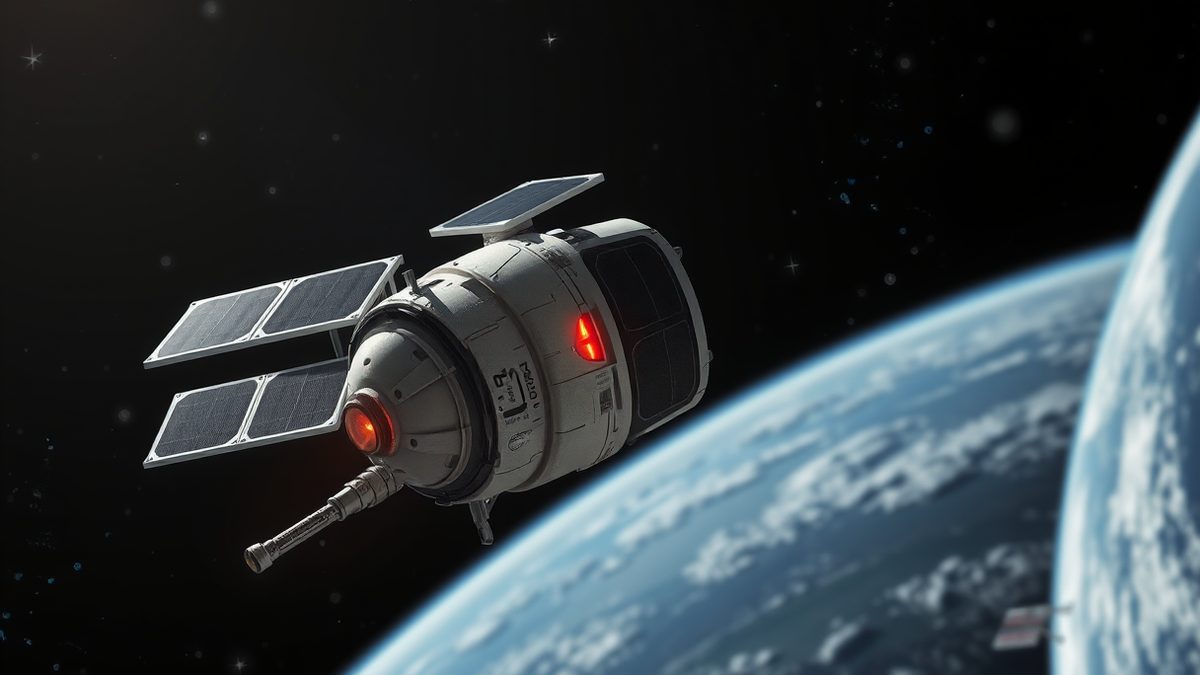
NASA and Katalyst Space Technologies said on Wednesday, 19 August that they are giving up on the Link satellite's attempt to save the Swift gamma-ray observatory. The telescope is expected to reenter Earth's atmosphere and burn up later this year. Ars Technica reports that the rescue craft is still alive, but the company said "ongoing attitude control issues" will keep it from completing the boost.
The mission was always a long shot. NASA awarded Katalyst a $30 million contract less than a year ago and gave the Arizona company just nine months to design, build and launch Link. Ars Technica notes that first-of-a-kind satellites usually take several years to prepare. The compressed schedule forced engineers to accept technical risks they might otherwise have rejected.
How the rescue unravelled
Link launched on 3 July aboard Northrop Grumman's Pegasus XL rocket. The plan called for the refrigerator-sized spacecraft to fly up to Swift, grab it with three robotic arms, and raise its orbit using three xenon-fueled electric thrusters. For the first few weeks, everything appeared to go well.
Then the problems started. On 15 July, NASA said Katalyst engineers had addressed early communications and attitude control issues. Software patches failed. On 28 July, the agency reported that Link's attitude control systems had malfunctioned, causing the spacecraft to spin and leading to sporadic communications. NBC News reported that Link was rotating at about 9 degrees per second. Mission managers managed to fire the thrusters to slow the spin this month, but the underlying fault persisted. Ars Technica reported that two of the satellite's three reaction wheels stopped working. Cold gas thrusters used for finer pointing also had issues. That left the three low-impulse plasma thrusters as the only means of regaining control as Link zipped around Earth at nearly 5 miles per second.
"Katalyst designed, developed, and launched an experimental spacecraft to go after an ambitious mission on an aggressive timeline," said CEO Ghonhee Lee. "We took on this high-risk, high-reward challenge and are proud of the milestones we reached along the way."
NASA administrator Jared Isaacman acknowledged the outcome was not what was hoped for, but said it "does not change why this mission was worth attempting." Shawn Domagal-Goldman, director of NASA's astrophysics division, called it "a first-of-its kind attempt, developed on an unprecedented timeline driven by the Sun's activity."
Why Swift matters
Swift launched in 2004 with instruments to study gamma-ray bursts, the most powerful explosions in the universe, triggered by events such as the births of black holes and collisions between ultra-dense stars. It far outlived its original two-year design. Astronomers still rely on its combination of multi-wavelength instruments and agile pointing to locate bursts for follow-up observations by other telescopes. Ars Technica puts the observatory's cost at $500 million.
The trouble began in 2024, during a period of intense solar activity, NBC News reported. All satellites in low Earth orbit slowly lose altitude to atmospheric drag, but when the Sun heats the atmosphere, that drag increases and orbits can decay quickly. Swift has no thrusters of its own, so a servicing mission was the only way to keep it up. The observatory had already paused science operations ahead of the rescue attempt.
Katalyst is not abandoning Link. The company said it will try to approach and rendezvous with Swift to demonstrate close-in navigation technology that could feed into future satellite servicing. Isaacman said NASA would "learn everything we can from LINK's rendezvous attempt." Whether that is enough to offset the loss of a working gamma-ray observatory is another question.
Sources
3- 01NASA calls off rescue mission for its falling Swift space telescopeEN
- 02NASA mission to save its sinking space telescope failsEN
- 03NASA calls off mission to rescue Swift gamma-ray observatoryEN
All figures and quotations in this text come from the sources listed below.
Content prepared by the editorial team with AI assistance.
Sofia Marchetti
Comments
0- No comments yet — be the first.