Perovskite solar research shifts to stability as Noak raises €5 million
Noak, a Belgian spin-off from imec and Hasselt University, has raised €5 million (about $5.57 million) in seed funding. The company says the money will push its perovskite-silicon tandem solar cells from the lab toward gigawatt-scale manufacturing.
 Sofia MarchettiScience and health
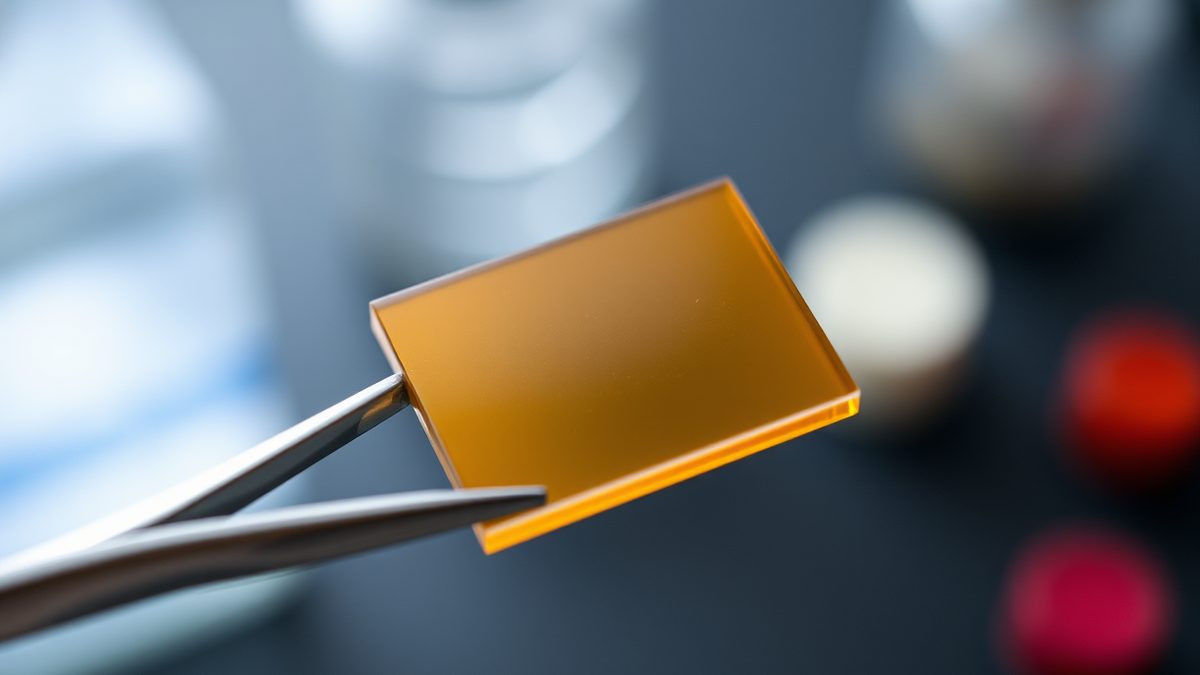
For module makers and investors, the question has shifted. Cell efficiency is no longer the only gate. Heat, humidity and scalable deposition decide whether perovskite tandems reach factories. The newest lab results come from different architectures at small scale. None of them yet proves field lifetimes or manufacturing yields.
Noak's seed round
Noak is a spin-off from imec and Hasselt University in Belgium. Its technology builds on more than a decade of research at Hasselt University, imec and EnergyVille. The company says the tandem stack rests on five years of outdoor operating data from more than 10 test sites in Asia, Europe and North America. The Helios Foundation, Nuhma and V2HFin backed the seed round.
The cash goes to EnergyVille in Genk. There Noak will use existing research infrastructure and prepare gigawatt-scale manufacturing partnerships. It lands in a weaker venture market. Solar VC funding reached $2 billion across 60 deals in the first nine months of 2026, according to Mercom data. That is down 31% from $2.9 billion in the same period of 2025.
Noak's pitch is durability, not a record.
Why stability is the bottleneck
At the Korea Institute of Energy Research (KIER), researchers built a nickel oxide catalyst. It pulls lithium ions out of the hole-transport layer once lithium salts have driven the needed reactions. The champion cell reached 25.24% power conversion efficiency and 25.1% stabilized output under one-sun illumination. It had an open-circuit voltage of 1.175 V and a fill factor of 83.21%. It kept more than 90% of its initial efficiency after 500 hours of continuous operation, and 95% under damp-heat testing at 85 C and 85% relative humidity. The process also raised hole-transport-layer conductivity by a factor of 2.5. It oxidized spiro-OMeTAD in under five seconds without the additive tBP.
Argonne National Laboratory went after crystallization instead. Its team added zinc bromide and methylammonium chloride to lower the melting point of the perovskite and slow crystal growth.
Additives and interfaces
A review from Zhengzhou University argues that zwitterions can combine defect passivation, crystallization modulation and interfacial energy-level tuning in one molecular unit. Betaine-type zwitterions are the most studied class. In tin perovskites, L-asparagine raised efficiency from 10.54% to 13.31%. Formamidine sulfinic acid reached 22.06% in a wide-bandgap device.
The salt-assisted Argonne work produced a 26.5% solar cell and an LED with 26.1% external quantum efficiency.
Tin cells remain far behind their lead-based rivals. A CsSnI3 device reached 10.76%, up from 8.98% for an unoptimized counterpart built with the same materials and environment. The first CsSnI3 cell, reported in 2012, managed about 0.9%.
What happens next
Noak's design moves electrical connections to the rear of the cell with a three-dimensional woven back-contact foil. The company says this cuts shading losses. It also splits tandem cells into smaller series- and parallel-connected sub-cells to reduce metal use.
The company frames the seed round as groundwork for large-scale production, not a product launch. It has given no ship date for a commercial module.
Sources
28- 01Zwitterions could be much more than defect passivators in perovskite solar cellsEN
- 02Salt-assisted crystal growth boosts perovskite solar cell and LED performanceEN
- 03Researchers improve perovskite cell stability with lithium-removal processEN
- 04Simulated and Real: Tin Perovskite Solar Cell Hits 10.76% After Model-Guided RedesignEN
- 05Noak Raises $5.6M for Perovskite Silicon Tandem SolarEN
- 06Researchers develop molecular locking strategy for organic solar cells - pv magazine GlobalEN
- 07Scientists trick cancer cells into making the drugs that kill themEN
- 08If The US Department Of Defense Gets Solar Power, Why Can’t We?EN
- 09Rapid LLM development is outrunning the research meant to explain it, study findsEN
- 10Hanwha Q-Cells shifts focus to research and development in EuropeEN
- 11Scientists reverse liver cell aging and cut Alzheimer’s-linked protein in halfEN
- 12Solar Topics in Small Business Innovation Research and Small Business Technology Transfer (SBIR/STTR) - Department of Energy (.gov)EN
- 13Flexell Space and Satoro Agree to Collaborate on In-Orbit Demonstration of Next-Generation Space Solar CellsEN
- 14 The Star Wars Eclipse — Want to see the 2027 total solar eclipse on Tatooine? Head to Tunisia EN
- 15Here’s how solar and wind developers can hold on to tax creditsEN
- 16Waaree doubles Texas solar module manufacturing capacity to 3.2 GWEN
- 17Germany awards 288 MW of solar in rooftop tender at average price of €0.0967/kWhEN
- 18Solar PV cuts Spain’s electricity costs by €17.02 billion over 18 monthsEN
- 19Slovenia tenders solar-plus-storage projectEN
- 20Shenzhen Nanshan Power seeks majority stake in Trina Solar’s tracker businessEN
- 21As Diesel Costs Surge for Farmers & Rural Businesses, Solar Offers a LifelineEN
- 22Tesla Powerwall 3 now boosts heat pumps to store cheap solar as heatEN
- 23Accelsius Supports NSF Data Center Efficiency Research at VillanovaEN
- 24Hyperion Research: Nearly 20% Growth in HPC and AI-for-Science Server Market, Dell Takes Lead from HPEEN
- 25Cranberry Bogs Were Unprofitable, Then Solar Saved The DayEN
- 26Cellnex signs €375m loan with EIB to support rollout of 5G infrastructureEN
- 27The Share of Solar Generation with Co-located Battery Storage Is IncreasingEN
- 28 On this day in space! Oct. 30, 1964: NASA's weird Lunar Landing Research Vehicle takes 1st test flight to help Apollo astronauts land on the moon EN
All figures and quotations in this text come from the sources listed below.
Content prepared by the editorial team with AI assistance.
Sofia Marchetti
Comments
0- No comments yet — be the first.