Liver biopsy confirms base editing corrected a gene inside a patient
A liver biopsy has confirmed that base editing corrected a disease-causing mutation inside a living patient, a first. The case, in the Journal of Hepatology and covered by Gadget Review on 3 November, involved severe PiZZ alpha-1 antitrypsin deficiency.
 Sofia MarchettiScience and health
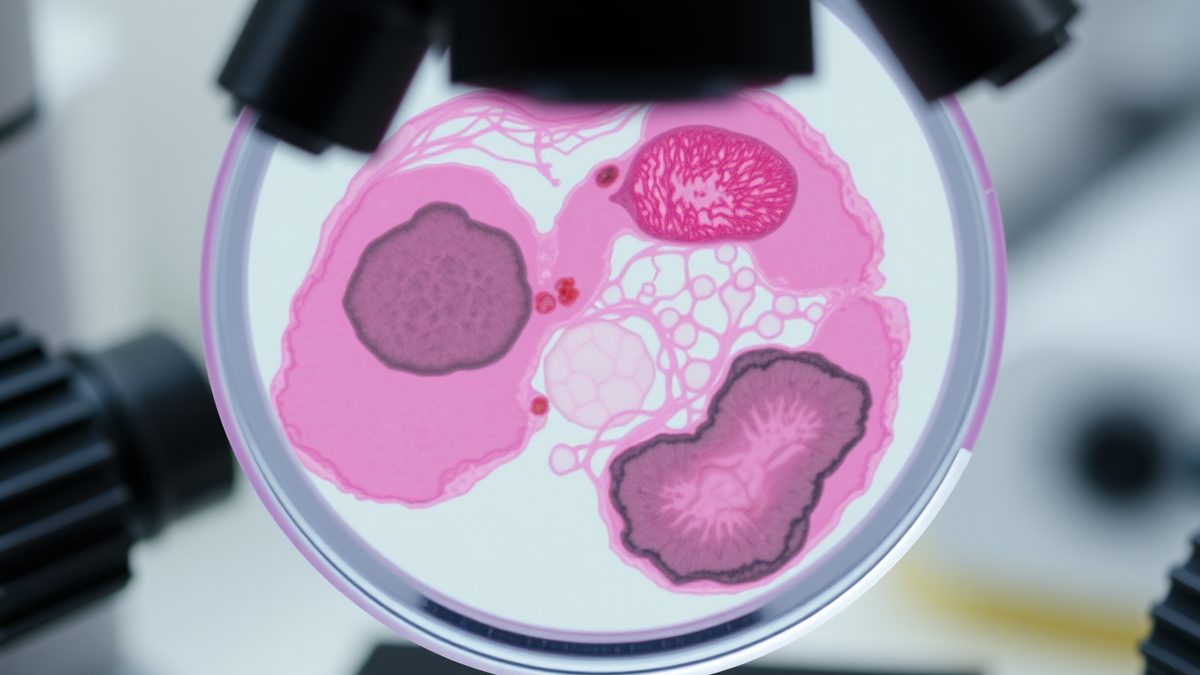
A biopsy, not a blood test
Investigators from Hannover Medical School and Renji Hospital in Shanghai published the case in the Journal of Hepatology. It centres on a patient with severe PiZZ alpha-1 antitrypsin deficiency. A mutation in the SERPINA1 gene makes liver cells produce a misfolded protein that damages the liver and cuts the functional protein the lungs depend on. Base editing chemically alters a single DNA letter without introducing a programmed double-strand break, which separates it from older editing approaches. The aim is precision repair at the source rather than adding a working gene copy through a viral carrier.
The result was a mosaic. Liver cells were a mixture of fully corrected PiMM cells, partially corrected PiMZ cells and unedited PiZZ cells.
Doctors generally do not associate PiMZ with the severe disease phenotype that PiZZ causes, so partial correction across many liver cells may carry clinical weight. The case does not prove that the mosaic correction has already reduced liver or lung disease risk. Investigators found no detectable bystander edits or off-target alterations in the analysed biopsy. That finding applies to that analysis and follow-up period. It does not cover long-term safety. The patient developed stable, clinically meaningful blood levels of functional AAT protein, which suggests the edited cells resumed productive protein synthesis.
The limits of one case
One biopsy is one patient at one point in time.
Separately reported company data from four participants included one biopsy showing 54% target-site correction at 10 weeks. The company recorded no treatment-related grade 3 or higher adverse events at the data cutoff. Those figures still need independent clinical validation. Four participants at a single cutoff cannot settle efficacy.
Therapy remains investigational. It is not an approved alternative to augmentation therapy, and it does not replace liver transplantation for advanced AATD-related liver damage.
Durability is the open question. One published biopsy cannot establish how long corrected cells persist. It cannot show whether outcomes improve at population scale or whether rare adverse effects appear over longer follow-up. Current evidence does not yet establish lung disease outcomes.
Why one dose is not automatically simple
The same week brought a wider argument about one-shot medicine.
Eric D. Smith and Venkatesh L. Murthy of University of Michigan Health published a perspective in JAMA Internal Medicine, with publicity on 3 November. They note that researchers have identified more than 6,000 rare genetic disorders. Only a small proportion currently have targets that can be treated. Gene therapies have already scored wins against spinal muscular atrophy and sickle cell disease. Researchers are now asking whether the same approach could manage high cholesterol, heart disease, obesity and diabetes. That means treating people who are not facing a fatal illness.
Redosing is the practical catch. The University of Michigan Health authors explain that many gene therapies use modified viruses to carry genetic instructions into cells. The immune system can recognise those delivery vehicles and respond. Giving the same treatment again may therefore be difficult or impossible, even if its benefits begin to fade. Current therapies also target somatic cells, the body's non-reproductive cells, rather than germline cells.
Mice are still ahead of the patients
One preclinical programme shows how far the laboratory still is from a biopsy result like that one.
At Oxford, a team used genome editing to switch on zeta-globin rather than repair the faulty alpha-globin genes themselves. Zeta-globin is an embryonic alpha-like globin gene that normally goes silent around six to seven weeks after conception. Nature Genetics published the work, and the Progress Educational Trust reported it on 2 November. In a mouse model of haemoglobin Bart's hydrops fetalis syndrome, edited embryos survived to late pregnancy and developed near-normal red blood cells. In blood stem cells from patients, the edits reactivated zeta-globin. The cells produced around half the normal level of alpha-like globin.
Researchers have not demonstrated half-normal output in patients. The researchers say safety in human blood stem cells is unestablished, including off-target effects and long-term engraftment. There is currently no equivalent genome-editing treatment for alpha-thalassaemia.
"Our study shows that small changes to regulatory DNA can reactivate an embryonic gene that is normally silenced after early development," said Dr Siyu Liu. He is the first author of the study.
Regulators and the money
The FDA published draft guidance on 2 November that could let multiple related, patient-specific genome editing therapies sit under a single Biologics License Application. The mechanism is an "individualised feature space", which defines how much the editing components can vary while staying inside one licence. A new variant within that space would count as a manufacturing change. It would require a BLA supplement with in vitro evidence rather than a fresh application.
"This guidance gives sponsors the regulatory clarity they need to develop therapies tailored to each patient's unique genetic makeup," said Kyle Diamantas. He is acting commissioner of food and drugs. The FDA may revise the draft. Public comment runs until 27 November 2026.
Money moved the other way at Ultragenyx. The company said on 3 November it would cut 20% of employees and scrap a Wilson disease gene therapy. The quarter had brought two FDA approvals and a setback in Angelman syndrome, Endpoints News reported.
In the UK, Manchester University NHS Foundation Trust said on 23 October that the first UK patient had completed gene-editing therapy for sickle cell. Among patients, appetite is uneven. In a qualitative study of 21 adults with familial cardiomyopathy, about one third said they would hypothetically join a trial or adopt a therapy early after FDA approval. That is a small interview sample, not a population survey.
Sources
24- 01Scientists Just Confirmed Gene Editing Repaired a Faulty Liver Gene Directly Inside a Human Patient!EN
- 02Gene editing could replace a lifetime of medication, but there's a catchEN
- 03Genome editing reactivates zeta-globin gene in alpha-thalassaemiaEN
- 04FDA outlines regulatory framework for personalised genome editing therapiesEN
- 05Ultragenyx to lay off 20% of employees, scrap a Wilson disease gene therapyEN
- 06Patients weigh promise and peril of gene therapies for inherited heart diseaseEN
- 07First UK patient completes treatment of gene-editing therapy for sickle cellEN
- 08In Vivo Gene Editing Market Advances as Intellia Reports 87% Reduction in Disease Attacks in Landmark Phase 3 Trial - openPR.comEN
- 09From Brittle Bones to Gene Editing: New Map of Osteogenesis Imperfecta and Its Therapies - Bioengineer.orgEN
- 10STAT+: Amid Mass General Brigham layoffs, CEO pens vague letter, stirring staff anxietyEN
- 11Aluminum–Air Generators for Data Centres Face a Metal Logistics TestEN
- 12Gene editing could transform Huntington’s treatment – study - NR TimesEN
- 13STAT+: Pharmalittle: We’re reading about a generic HIV prevention shot, Lonza buying U.S. facilities, and moreEN
- 14Behind-the-meter generation could deliver five times more grid relief than data center load shiftingEN
- 15STAT+: Coming readout of Kymera eczema trial is a high-stakes moment in a bid to rival DupixentEN
- 16STAT+: FDA OKs generic HIV prevention shot, widening access for lower-income countriesEN
- 17The Share of Solar Generation with Co-located Battery Storage Is IncreasingEN
- 18AC Milan, Inter strike ‘€650m’ Generali naming rights deal for new stadiumEN
- 19China touts AI milestone: models generate more tokens than used in trainingEN
- 20China joins global race to reawaken brain-injury patients through ultrasound therapyEN
- 21Cell therapy weekly: discontinuation of autoimmune disease NK cell therapy - RegMedNetEN
- 22A new CRISPR breakthrough allows for the correction of genetic alterations directly within the human body - ExaudiEN
- 23CRISPR Prime Editing Rewrites DNA in the Human Body for the First Time - SingularityHubEN
- 24Google Cloud and NVIDIA Announce General Availability of NVIDIA Vera Rubin InfrastructureEN
All figures and quotations in this text come from the sources listed below.
Content prepared by the editorial team with AI assistance.
Sofia Marchetti
Comments
0- No comments yet — be the first.