Solid-state, semi-solid, sodium: battery labels outrun the test data
Linda Nazar, a chemistry professor at the University of Waterloo, has won Canada's top science prize for three decades of battery materials research, CBC reported on 3 November. The Gerhard Herzberg Canada Gold Medal for Science and Engineering carries $1 million in funding over five years.
 Sofia MarchettiScience and health
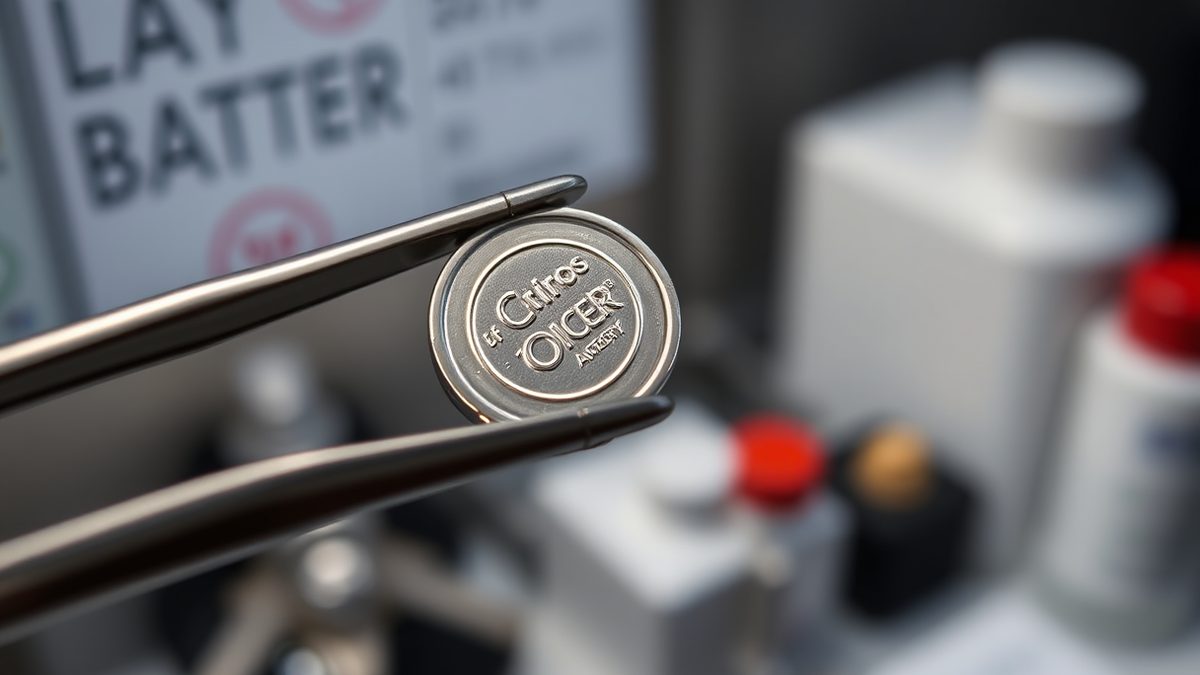
The award puts safety first
The Natural Sciences and Engineering Research Council of Canada announced the award, CBC reported on 3 November. The council said her "world-leading discoveries have transformed the science of electrochemical energy storage" and laid a foundation for safer, more efficient cells. Nazar told CBC she was "deeply honoured" and "quite honestly humbled" to join the list of past winners.
That work matters to anyone buying an electric vehicle, a warehouse robot or a grid battery, because flammable liquid electrolytes are the failure mode regulators watch. What buyers still lack is a way to compare designs. Xpeng has not said whether the batteries in its Iron robot are all-solid-state, and Svolt has not published the test conditions behind its fast-charge figure.
Her case for solid state is straightforward. Liquid electrolytes are flammable and can burst into flames, she said, while a solid version offers "much better safety".
She also claims a wider operating temperature range, naming drones flying at high altitude, Arctic deployment and military use. Higher energy density is the third selling point, achieved by packing cells more effectively in a configuration she called bipolar stacking. None of those claims is new. What is new is how fast the vocabulary has moved into shipping products.
Why the label matters
Svolt Energy's first mass-produced batch of 100-kWh Dragon Armor semi-solid fast-charging packs rolled off the line in Changzhou, Jiangsu province. The company announced the milestone on 26 October.
On 28 October, Xpeng vice president Gu Jie said solid-state batteries for the Iron humanoid robot had begun rolling off the production line in small batches. The robot itself is still pre-production. Xpeng's disclosure used the term "solid-state battery" without saying whether it means the all-solid-state technology the company announced in November 2025.
The distinction is not academic. Svolt defines semi-solid cells as using both liquid and solid electrolytes, while all-solid-state cells rely entirely on solid electrolytes. A buyer comparing the two press releases is comparing two different things.
Xpeng's update also came without an energy density figure or a production volume.
Sodium takes a different route
Elsewhere the chemistry is moving away from lithium altogether. A team led by Professor Chan-Jin Park at Chonnam National University in South Korea developed a polymerisable deep eutectic solvent electrolyte for sodium metal batteries.
Park's group says the electrolyte is non-flammable and leak-resistant, and that the polymerised matrix holds up when the cell is folded or cut. In full-cell testing the battery reached an initial discharge capacity of 110.2 mAh g-1 at 0.1 C with nearly 99% coulombic efficiency. It kept 90.4% of its capacity after 1,000 cycles at 2 C. A pouch-cell version kept an LED lit while being folded and cut. The study appeared in Energy Storage Materials.
Park framed the work as a route to cheaper storage, not a premium product. He cited grid storage, backup power and low-cost rechargeables.
What factories claim
The company says the pack supports 900-volt, 6C charging and adds 500 km of range in 12 minutes. It says cycle life exceeds 3,000 cycles, for a theoretical lifetime distance of more than 1 million km.
Chairman and CEO Yang Hongxin said semi-solid batteries "will become a mainstream technology over the long term," not a stepping stone. Svolt said in May that all-solid-state cells were still a long way from mass production, and predicted 2026 would mark the start of widespread semi-solid adoption. Xpeng is on a different clock. It still targets mass production of Iron by the end of 2026, with commercial deployment in stores and other settings from 2027.
Definitions and what comes next
The U.S. Department of Energy draws the line simply. Solid-state batteries use solid electrolyte solutions and do not need a separate separator, which makes them less prone to leakage from damage or swelling in hot temperatures. The department also says next-generation designs, including solid-state and flow batteries, may improve performance and safety while cutting use of critical materials.
Nazar has moved on to another chemistry herself. She is working on aqueous batteries, which use water as an electrolyte, with the Department of Energy out of a hub at Stanford.
Svolt says it will keep advancing semi-solid cells first, followed by all-solid-state.
Sources
28- 01Waterloo researcher receives Canada's highest recognition for scientific excellence for work with batteriesEN
- 02Novel electrolyte advances sodium battery chemistryEN
- 03Solid-state batteries for Xpeng's Iron humanoid robot enter small-batch productionEN
- 04Svolt begins mass production of 100-kWh semi-solid fast-charging battery packsEN
- 05Breaking It Down: Next-Generation BatteriesEN
- 06What type of battery does the Slate Truck use?EN
- 07Rapid LLM development is outrunning the research meant to explain it, study findsEN
- 08Hanwha Q-Cells shifts focus to research and development in EuropeEN
- 09Nio adds 10 million battery swaps in 88 days, taking total past 130 millionEN
- 10Swarm Of Electric Trucks Coming To US (Battery Swapping Included?)EN
- 11Quantum Interconnects Link Two 120-Qubit Processors (IBM Research)EN
- 12Hyperion Research: Nearly 20% Growth in HPC and AI-for-Science Server Market, Dell Takes Lead from HPEEN
- 13How Europe’s battery passport could have a big impact on US e-bikesEN
- 14Global EV battery market share in January-September 2026: CATL 39.1%, BYD 15.2%EN
- 15Batteries Beat Norway’s Hydrogen Bulk Carriers on Cost in Two Modeled RoutesEN
- 16The Share of Solar Generation with Co-located Battery Storage Is IncreasingEN
- 17 On this day in space! Oct. 30, 1964: NASA's weird Lunar Landing Research Vehicle takes 1st test flight to help Apollo astronauts land on the moon EN
- 18GAC's battery unit Inpow starts production at Thailand plant, its first overseas pack facilityEN
- 19Microsoft Research Focus – Edition #97EN
- 20PJM desperately needs grid batteries. Here’s a way it could get some.EN
- 21Li Auto launches 2026 i6 with unchanged starting price, upgraded in-house chip and batteryEN
- 22Researcher-in-the-Loop Evolutionary Discovery of Entanglement-Assisted Quantum Code FamiliesEN
- 23Can battery swapping and energy storage power CATL’s next phase of growth?EN
- 24Breakthrough in Silicone Recycling - chemeurope.comEN
- 25What Women in Indonesia and Malaysia Want From Research on Climate and HealthEN
- 26Claude helped plan risky bird flu research. What did the AI add?EN
- 27Massachusetts sets big battery goals — and the policies to back them upEN
- 28As US grid batteries surge, risk of fires plummetsEN
All figures and quotations in this text come from the sources listed below.
Content prepared by the editorial team with AI assistance.
Sofia Marchetti
Comments
0- No comments yet — be the first.