US Supreme Court: work made only by AI has no author. The fight moves on
The refusal to hear Stephen Thaler's case closes the question of machine authorship, but shifts the dispute onto training on other people's data, where the EU data omnibus is rewriting the rules.
 Chris DelaneyOpinion and comment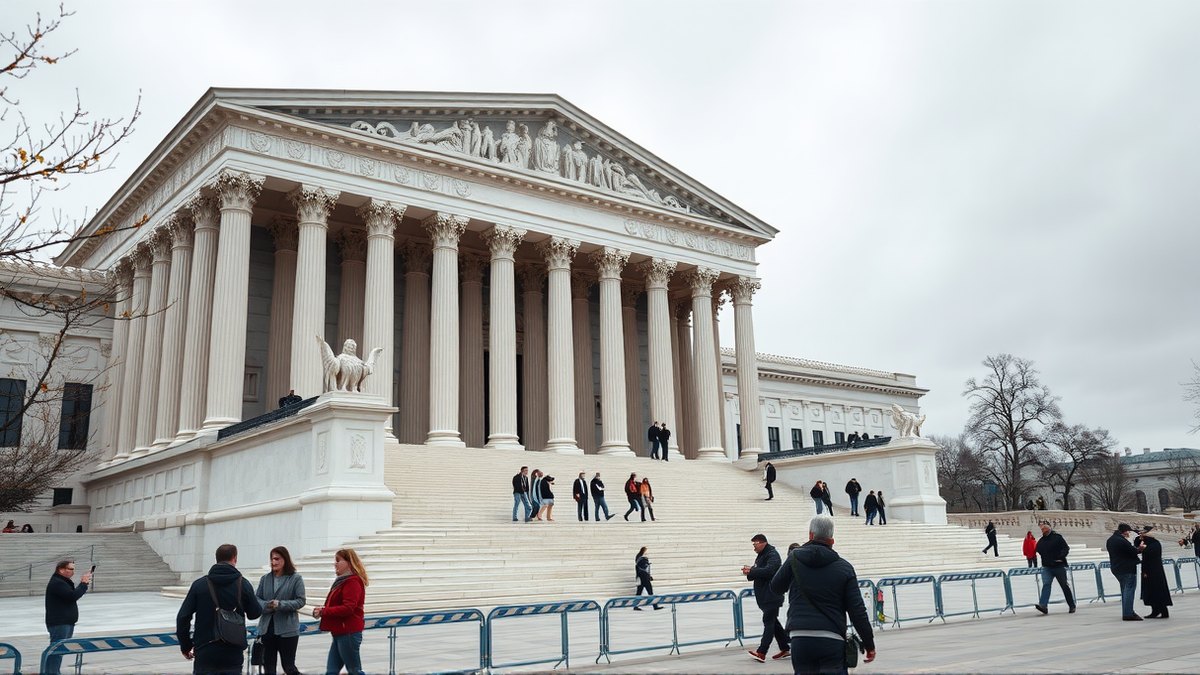
Thesis: no protection for fully AI-generated works is consistent, but it settles nothing about the value of the market. The real fight moves higher up, to whether training on someone else's creative output is legal. There the US and China rule in opposite directions.
On 2 March 2026 the Supreme Court of the United States declined to hear the appeal of the scientist Stephen Thaler in the copyright case over an image generated by his AI system. Thaler applied in 2018 to register the work "A Recent Entrance to Paradise". He had already lost before the copyright office, which ruled in 2022 that a work must have a "human author". A federal judge in Washington called human authorship a "fundamental requirement" of protection in 2023. The appeals court for the District of Columbia circuit upheld that ruling in 2025.
The ruling closes the thread but does not end the debate, for two reasons. The office also consistently refused registration for Midjourney images when their authors claimed "co-authorship with AI". The line is clear: no human, no right. And fully AI-generated output is a marginal part of the market. The value sits on the side of training data, not the result.
That is where the split appears, and nobody in Washington will settle it. A Chinese court in Wuhan held that the creator of AI-generated content can hold copyright if they controlled and anticipated the result by writing the prompt and choosing the parameters. It was the first such case in that city. The doctrine is the opposite of the American one: what counts is not who physically drew the pixels, but who was in command of the process. The two largest AI markets start from two different definitions of authorship, and at some point they will have to explain what that means for works crossing borders.
The European Union settles the same problem somewhere else entirely, in data protection law. The compromise put forward by the Irish presidency on 3 September 2026, revealed by Politico, revives the idea of treating the use of personal data for AI training as a "legitimate interest" by default. Germany was to push for such a solution, arguing it would help European companies. Max Schrems of noyb calls it plainly a "digital expropriation of Europeans", and the solution itself a "complete opening of European data to global corporations".
So there are three models. The American one requires a human, and the decision belongs to that human. The defendant companies conceded as much, admitting they had trained on protected material. The Chinese one counts control over the process. The European one, instead of ruling on authorship, tries to open the input data wide. Three legal philosophies in one global value chain is a recipe for regulatory arbitrage. Companies will train where it is cheapest and sell where it is dearest, as long as the courts keep up with the technology.
Sources
3- 01美国最高法院一锤定音,AI 作品不受版权保护ZH
- 02全国首例 AI 生成图著作权案在武汉判决ZH
- 03"Digitale Enteignung": Datenschützer warnen vor Pauschalerlaubnis für KI-TrainingDE
All figures and quotations in this text come from the sources listed below.
Content prepared by the editorial team with AI assistance.
Chris Delaney
Comments
0- No comments yet — be the first.