Agoda's AI Assistant reaches 21 markets as trust in AI bookings lags
Agoda has taken its AI Assistant live in 21 markets, including Singapore and India, after a limited test in September, TechGoondu reported on 3 November. The tool plans and books a whole trip inside a single conversation.
 Peter LindqvistSport, cars and travel
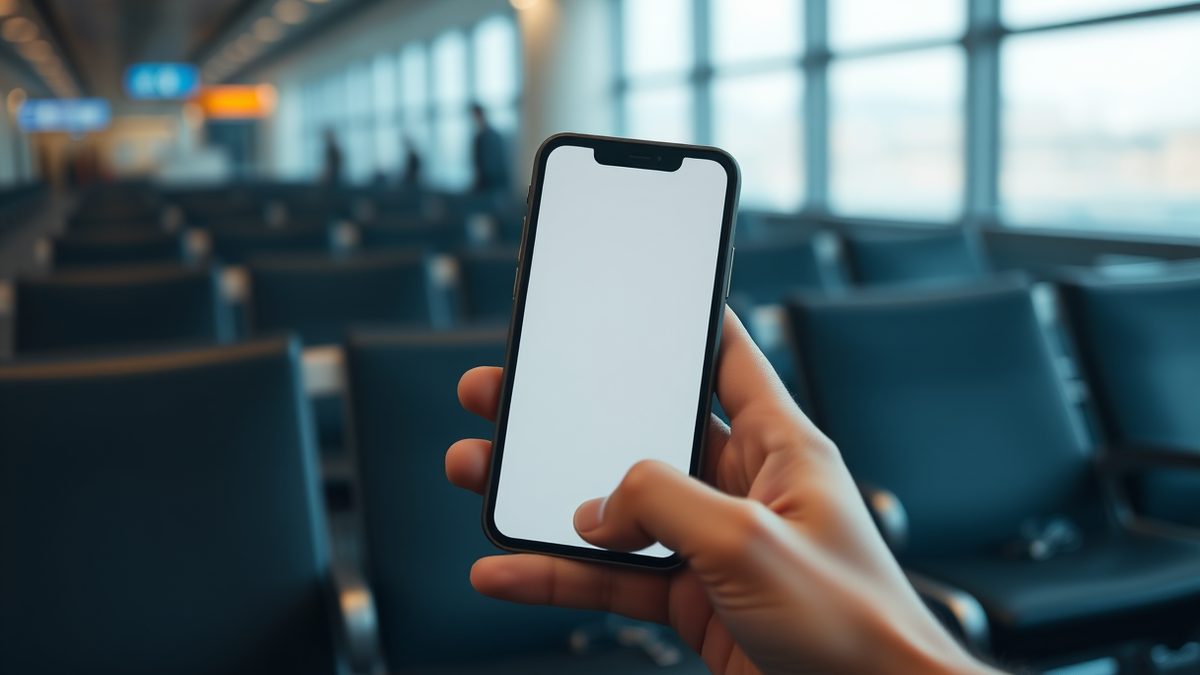
One chat from idea to reservation
The feature sits in the company's mobile app.
That matters because the reservation is the last step. If a chat can finish the booking, the decision moves away from search results and review sites and into the assistant.
According to Breaking Travel News, it is the first new booking experience in Agoda's 20-plus year history. The assistant combines conversational planning with live inventory of more than six million accommodations, flights, tours and attractions. A traveller can ask for a five-day family trip to Osaka, compare neighbourhoods, check prices and availability, and continue into a booking without starting over.
Two model suppliers sit underneath. OpenAI models power the core conversation, while Gemini with Google Maps Grounding supplies restaurant and point-of-interest data, including ratings, photos and opening hours. Web search is built in, so the assistant can pull current information alongside Agoda's own listings. A trip planner canvas holds upcoming bookings, saved places and plans still being considered.
Agoda frames the target as fragmentation. "People jump between apps, tabs, messages, and spreadsheets just to organize a single trip," CEO Omri Morgenshtern said.
The trust gap the launch runs into
Consumer trust has not caught up with the product. Across all age groups, 36% of travellers said they would trust AI to complete a booking, according to the WTM Global Travel Report 2026, published by WTM London with Tourism Economics.
The age split is wide. 54% of travellers aged 18 to 34 trust AI to book, against 18% of those aged 55 and older, a gap of 36 percentage points. Acceptance rises for less autonomous tasks: 58% would use AI to search and compare prices, and 53% to generate recommendations.
Usage is climbing anyway. The share of travellers using AI chatbots to plan international trips more than doubled from 10% in 2024 to 24% in 2026, the report found.
MakeMyTrip's counter-argument
Not every travel company accepts that a general assistant can own the booking. On MakeMyTrip's earnings call for the quarter ended 30 September, co-founder and Group CEO Rajesh Magow argued the opposite.
"A general assistant can recommend. A travel platform is accountable for delivery," Magow said.
He cited supply, data and servicing. Much of India's hotel, homestay and bus supply is not listed on the open web, he said, while MakeMyTrip lists over 105,000 stays across 2,000 cities and over 50,000 bus schedules a day.
Its own assistant, Myra, handles over 90,000 daily conversations and assists over 3,000 bookings a day, up from 25,000 conversations a day a year earlier, Magow said. Customers who use Myra book 1.7 times as often as those who do not. In Tier 2 and Tier 3 cities the figure is 2.1 times, and those cities account for 55% of its conversations. Myra resolves over 53% of post-booking flight and hotel queries without a human.
The commercial effect shows up elsewhere. Plain-language searches make up 10% of hotel searches and convert 24% better than filter-based search, according to the company. A new AI recommendation system raised hotel conversions by 2.5%, and by nearly 6% for premium stays.
Bank of America's Sachin Salgaonkar said MakeMyTrip risked "losing revenues" if customers moved to AI agents, and Magow replied that he would not jump to conclusions in India.
What nobody is counting
Booking Holdings reported that referrals from AI platforms accounted for less than 1% of its room nights.
Tourism Economics cautioned that the figure is a floor rather than a measure. Travellers who research with an AI assistant and then book directly or through a search engine are not counted as AI referrals, the report said.
Agoda says early beta findings show assistant users are more likely to book a connected trip combining hotels, flights, tickets and tours. MakeMyTrip launched end-to-end booking and payment in the previous quarter.
What to watch next
"As awareness and usage increase, trust in using AI applications to complete bookings is likely to grow," the WTM report said.
Morgenshtern put the aim in similar terms, saying the goal is to help travellers "make inspired decisions with more confidence". MakeMyTrip will keep building Myra while it experiments with outside assistants, and partnered with OpenAI in February.
Booking data, not survey data, would settle the question. Neither company has said how many trips are completed end to end inside its assistant.
Sources
12- 01New Agoda AI assistant promises simpler travel planning in "one conversation"EN
- 02Agoda's AI Assistant Brings Travel Planning and Booking into One ConversationEN
- 03Agoda rolls out AI travel assistant in India, integrates trip planning with live booking inventoryEN
- 04Agoda takes AI travel planning to 21 markets with new mobile assistantEN
- 05MakeMyTrip says AI agents can't replace travel platforms, as its own assistant handles 3,000 bookings a dayEN
- 06WTM Report: 54% of Young Travelers Trust AI to Book Their TripsEN
- 07Agoda launches AI assistant for seamless travel bookingEN
- 08How are AI assistants changing the way travelers plan their trips? - Vietnam.vnEN
- 09Percepto launches Axion AI platform to unify inspection data analysisEN
- 10The Ford Escape may return as an EV based on the UEV platform [Update]EN
- 11How digital membership platforms help sports NGBs leave the spreadsheets behindEN
- 12SoftBank teams up with five Japanese firms to build quantum-based platformEN
All figures and quotations in this text come from the sources listed below.
Content prepared by the editorial team with AI assistance.
Peter Lindqvist
Comments
0- No comments yet — be the first.