AI plus wrist-worn data flagged hypertensive crises 72 hours ahead, early study finds
Preliminary research due at the American Heart Association's Scientific Sessions 2026 found that AI analysis of blood pressure cuff and wrist-worn data flagged hypertensive crises up to 72 hours before they occurred. The study followed 4,190 adults with stage 2 high blood pressure in Pakistan for a year.
 Sofia MarchettiScience and health
What the model caught, and how far ahead
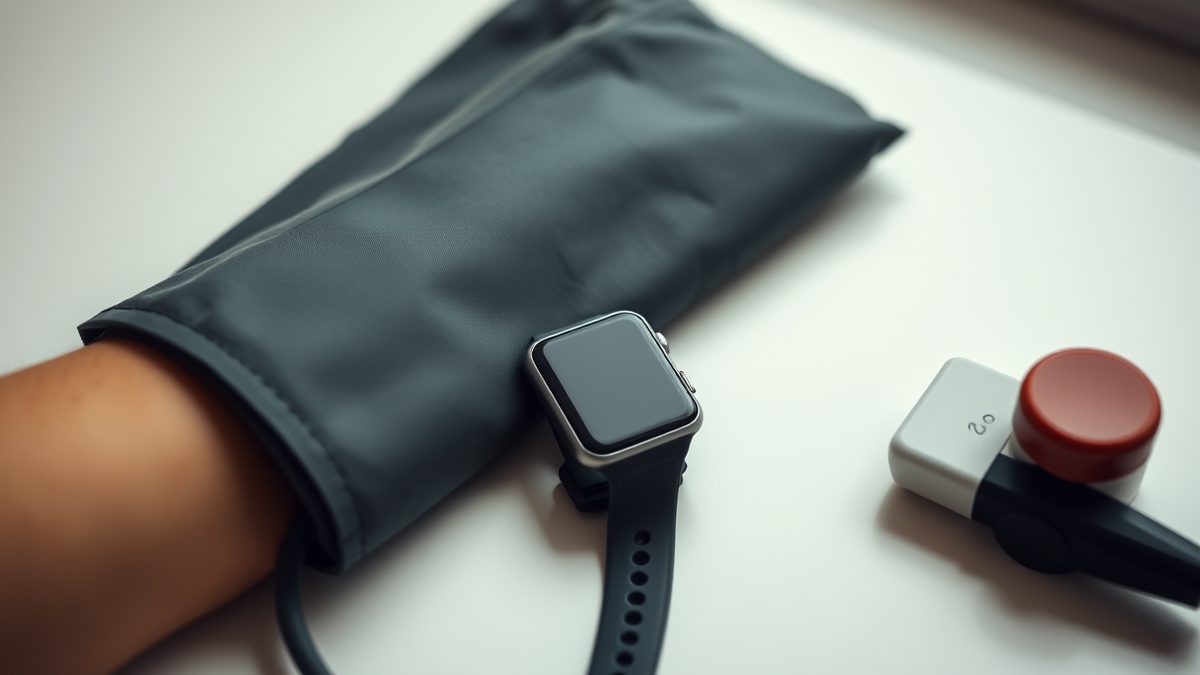
Participants wore a portable cuff monitor and a wrist fitness tracker with light-based sensors. The AI weighed 47 factors, including heart rate changes and the way pressure moved between day and night. Over the 12 months, 312 of the more than 4,000 participants had 418 hypertensive crises, about 7% of the group. A hypertensive crisis means readings above 180/120 mm Hg alongside acute organ damage, and it can lead to stroke, heart attack, kidney damage or pulmonary edema.
Nearly half of US adults have high blood pressure, according to the American Heart Association and American College of Cardiology 2025 guideline cited in the research, and hypertensive crises are a leading cause of heart-related emergency department visits. A warning that lands three days early gives a physician time to call, review symptoms and change a dose. That is the promise.
Two signals carried much of the predictive weight. Participants whose blood pressure did not fall during sleep, as it normally should, had nearly five times the odds of an approaching crisis. A rise of more than 35 mm Hg after waking, measured against nighttime pressure, carried nearly four times the odds. Among participants who received a positive alert, about 32% went on to have a crisis, while 97.4% of those without an alert stayed crisis-free. When doctors got an alert and adjusted medication within 24 hours, crises fell by about 61% and emergency room visits by roughly 45%, according to Tomorrow's World Today.
Why a three-day warning changes the calculation
Waleed Razzaq Chaudhry, the lead author and an internal medicine resident at the University of Maryland Capital Region Medical Center in Largo, Maryland, put the problem simply.
"Everyone's blood pressure changes throughout the day and night, and a single reading only captures one moment in time," he said. "By continuously tracking blood pressure and identifying patterns, we found that AI analysis of blood pressure may be a valuable addition to help identify early warning signs of dangerously high blood pressure".
Clinic readings arrive weeks or months apart, while pressure keeps moving in between. A cuff plus a wrist tracker produces a different kind of signal: a trend rather than a snapshot. Set that against what a hypertensive crisis sets off, and the appeal is obvious: an emergency visit, or a phone call and a dose change.
The caveats are not small
All participants came from a single hospital in Pakistan.
The American Heart Association points out that wrist devices are less reliable than traditional upper-arm cuffs, and that findings remain preliminary until fully published. Those reductions were observed inside that same single-hospital cohort, not in a controlled trial. Before any of this reaches a smartwatch, the researchers say the approach needs testing in broader groups.
A separate perspective in Frontiers in Digital Health makes a related methodological point. Jose E. Krieger of the Instituto do Coração at the University of São Paulo argues that continuous monitoring needs an individual baseline, agreement across several signals and a predefined clinical response, rather than population thresholds.
A systolic reading of 105 mm Hg may be tolerated by one older patient and signal clinically important hypotension in another, he writes.
Krieger is explicit that his five-element framework is conceptual and has not been prospectively validated. Its clinical utility, safety and impact on outcomes all need prospective testing, he writes.
Wearables are already inside treatment and trials
Wearable data is already inside treatment research, not only prediction. Garmin named Montefiore Einstein, a US cancer treatment centre, as its Expert's Choice at the Garmin Health Awards 2026.
The awards were presented at the close of the Garmin Health Summit 2026 in Bangkok, Thailand. Montefiore Einstein used the Garmin Health Connected Ecosystem in studies of patients receiving radiation, chemotherapy and immunotherapy, and its team reported being the first to show that wearable data collected before treatment can identify patients at risk of complications. HeraMED, an Australian-listed women's health company, took the People's Choice award. The awards drew 113 submissions from 31 countries, and six finalist teams presented at the summit, which ran on 28 and 29 October. The two winning teams received Garmin smartwatches and fitness trackers worth up to $10,000 in total.
Longer, more controlled studies are being built to test whether any of this holds.
The Buck Institute for Research on Aging has published the protocol for the TIME study, which will enrol up to 150 adults aged 55 and older in stable health. It is registered as NCT07107386, with enrolment beginning 15 June 2025. Participants complete nine weekly visits over 11 weeks plus four days of roughly 12-hour high-frequency sampling, alongside weekly blood draws and continuous wearable recording. The article reports planned methods rather than results, and no findings about aging biology have yet come from the cohort.
On the commercial side, San Francisco-based Alethios sells a Study Planner platform starting at $100 a month that pulls wearable data from Oura, Garmin and Apple Watch into a single study. The company says seven studies fully enrolled participants in under 24 hours in the past year.
What happens next
The blood pressure research is scheduled for AHA Scientific Sessions 2026, which runs 6-9 November in Chicago.
Sources
20- 01Wearable devices and AI provide early warning signs of hypertensive crisesEN
- 02Wearable With AI Could Predict Blood Pressure Crisis 3 Days EarlyEN
- 03Garmin Health Summit 2026: Celebrating groundbreaking digital health initiatives in AsiaEN
- 04Wrist-based health signals used in cancer treatment and women's health; Garmin announces awardsEN
- 05Wearable Alerts in Older Adults Need Accountability, Not Just More DataEN
- 06New study will map how the aging body changes hour by hourEN
- 07Alethios expands decentralized research tools for human health studiesEN
- 08STAT+: Democrats win power to push back on Trump’s health care movesEN
- 09Rapid LLM development is outrunning the research meant to explain it, study findsEN
- 10STAT+: FDA, CMS look to collaborate with states on health AIEN
- 11Digitalgipfel 2026: Was lange währt, wird nicht KI-NationEN
- 12Digitaler Führerschein kommt Ende NovemberEN
- 13Einführung des digitalen Führerscheins: Das müssen Autofahrer jetzt wissenEN
- 14The biggest conversations in health techEN
- 15How digital membership platforms help sports NGBs leave the spreadsheets behindEN
- 16Menstrual Health Technology Market is Booming Worldwide| Oura, Daysy, Kindara - openPR.comEN
- 17Studying Fraudulent North Korean IT WorkersEN
- 18IEEE Xplore Digital Library Adds AI AssistantEN
- 19Digital twins may reshape cardiovascular care, but nursing evidence remains thinEN
- 20NVIDIA Transforms European Retail, From Digital Discovery to Physical OperationsEN
All figures and quotations in this text come from the sources listed below.
Content prepared by the editorial team with AI assistance.
Sofia Marchetti
Comments
0- No comments yet — be the first.