DAMO RADAR: one model spots 146 diseases across 18 abdominal organs
Alibaba's DAMO Academy described a general-purpose medical imaging model on 18 September 2026 in the journal Science. The mean AUC across nearly 40,000 scans came to 0.913, and the team released the algorithm and the weights publicly.
 Sofia MarchettiScience and health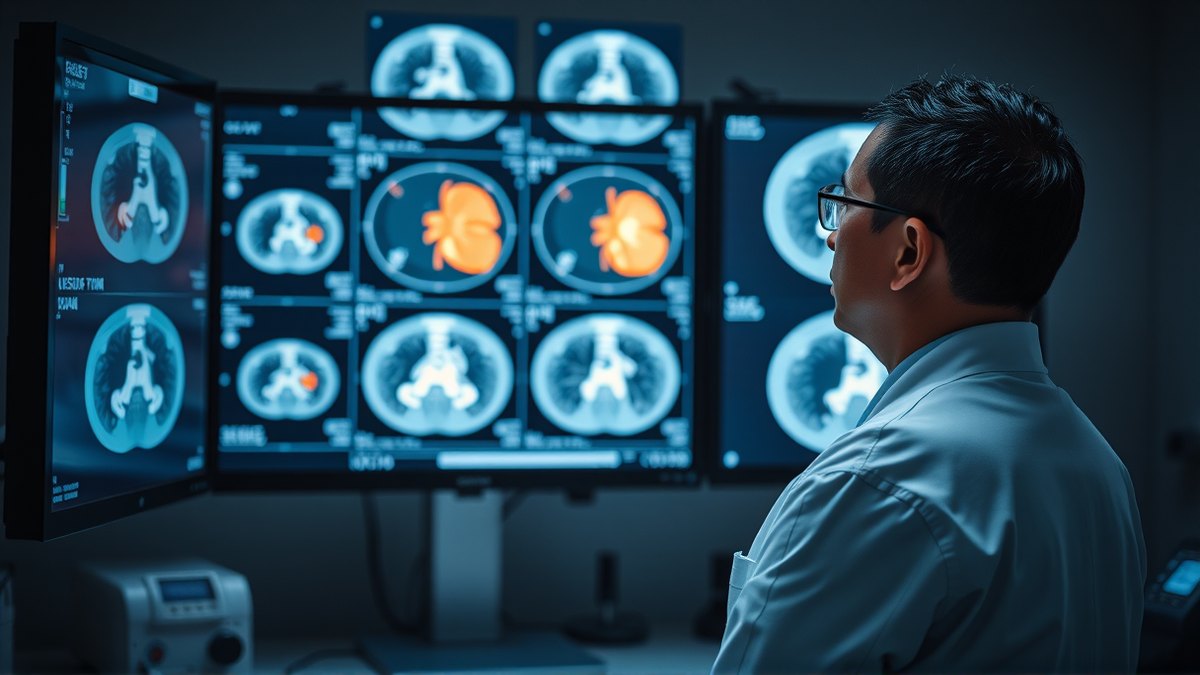
Alibaba DAMO Academy and the First Affiliated Hospital of Zhejiang University School of Medicine published the DAMO RADAR model on 18 September 2026 in the journal Science. It is a general-purpose medical imaging model. A single system reads contrast-enhanced CT scans and recognises 146 types of conditions across 18 anatomical organs of the abdominal cavity.
Medical imaging has followed a "one disease, one model" path. A lung nodule, pancreatic cancer and diabetic retinopathy each got its own tool. DAMO says those models "depend largely on manual annotation and are expensive, because training for a single disease usually takes two years, and once trained they do not generalise to other conditions". A general model is meant to cut that dependency.
RADAR was built for a hard job. One CT scan holds hundreds of slices. The organs of the abdominal cavity overlap and sit at similar density, so the signal of disease can be very faint. The model learned images and language together. Imaging data were paired with text from diagnostic reports. The system first identifies the organ, whether liver, pancreas or gastrointestinal tract, then links it to the description in the report. That keeps it from being distracted by healthy tissue in the background.
How it performed against doctors
The evaluation covered 18 organs and 146 diseases. Across nearly 40,000 real scans, the mean AUC was 0.913. The measure captures how well a system tells a sick person from a healthy one, and 1.0 is a perfect score. To compare the model with people, the teams brought in 26 radiologists from 14 centres: 11 experienced and 15 with less seniority. The doctors and the model read CT scans from 300 patients. On average RADAR did better than 23 of the 26 doctors. Only three experienced radiologists scored slightly higher than the model.
In a human-machine collaboration test, the model's suggestions raised the sensitivity of disease detection by about 10 percent, and the average time to read a single case fell by 30.7 percent. In some tests, younger radiologists working with the AI suggestions reached higher sensitivity than older colleagues without support.
DAMO compares the general model to navigation. It does not replace the doctor in making the final diagnosis, it only points to possible diseases and to areas that are easy to miss. "The core of a dedicated model is high precision, the core of a general model is broad coverage," the company argues, adding that the two paths do not compete but suit different clinical scenarios.
The algorithm code and the model weights are fully public for medicine and science worldwide. Publication alone is not deployment. The real value will be decided by tests in further hospitals and in populations other than the training one.
Sources
2All figures and quotations in this text come from the sources listed below.
Content prepared by the editorial team with AI assistance.
Sofia Marchetti
Comments
0- No comments yet — be the first.