748 Project: Wang Xuan and the laser typesetting of Chinese characters that began in 1974
In August 1974 China approved a project meant to let computers typeset Chinese print. Five years later the first newspaper page proof came off the system, and the technology was called "the second invention of Chinese printing".
 Naomi FeldmanCulture, food and lifestyle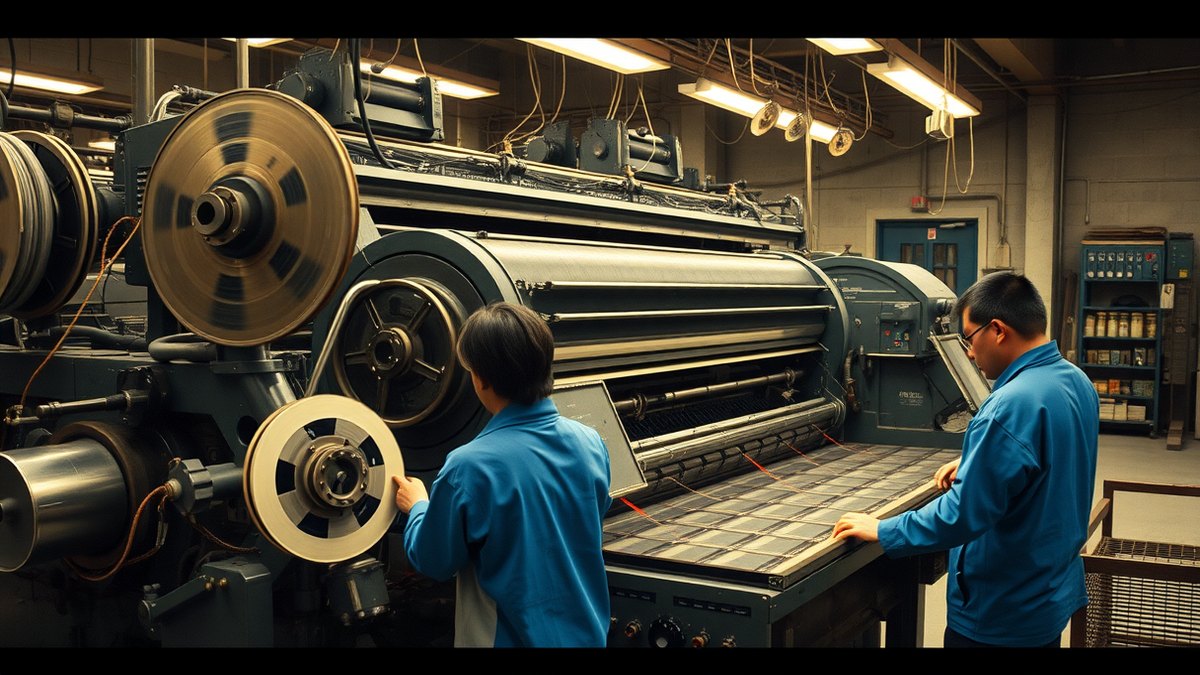
At the turn of the seventies and eighties, computers had so little throughput and storage that algorithms, not raw machine power, decided who got results in computing. That is the setting in which an idea took shape in China and sharply raised the productivity of Chinese printing.
The laser typesetting system for Chinese characters lets operators enter, edit and correct the text of Chinese newspapers and books, lay out text with illustrations and output printing forms by laser scanning. It covers digital character sets for simplified and traditional script, as well as Mongolian, Manchu, Tibetan and Uyghur, typesetting software, terminals for editing and correction, high-capacity storage, a raster processor, a laser imagesetter and a film processor. The system can also typeset and output texts in Western scripts. In August 1974 the project was approved under the name "Chinese character information processing system project", shortened to 748 Project. The Chinese authorities wanted in this way to let computers process printed Chinese characters.
1975: Wang Xuan joins
Wang Xuan joined the project in 1975. He was then a lecturer at the Radio Department of Peking University. In July 1979 the team he led output a newspaper page proof using the laser typesetting system for the first time. Wang Xuan was the creator and technical head of the whole system. In 1987, together with six other people, he received the first Bi Sheng printing award. In 1992 the world's first Chinese colour typesetting system was built. The research team he led created the foundations for computerising the entire publishing process, from editing to printing, and the work is described as "the second invention of Chinese printing". On the basis of the typesetting technology Wang Xuan founded the Founder group (方正集团).
From Wuxi to Beijing
Wang Xuan was born on 5 February 1937 in Shanghai, and his family came from Wuxi in Jiangsu province. Between 1941 and 1954 he spent thirteen years in Shanghai schools, and in 1958 he graduated from the Department of Mathematics and Mechanics of Peking University. He stayed at the university as a teacher, though during the Cultural Revolution he was on sick leave for more than ten years. In 1974 he took the post of assistant at the Radio Department. In March 1998, at the first session of the National People's Congress of the ninth term, he was elected a member of the Standing Committee. In 2001 he was awarded the state prize for the greatest achievements in science and technology, which made him the third scientist honoured with that prize. In 2003 he was elected vice-chairman of the Chinese People's Political Consultative Conference of the tenth term. He died on 13 February 2006 at 11:03 in Beijing. Asteroid no. 4913 was named in his honour, and in October 2019 Peking University renamed the Institute of Computer Science belonging to its School of Computer Science as Peking University, Wang Xuan Institute.
Sources
2- 01汉字激光照排系统 (维基百科, zh)ZH
- 02王选 (维基百科, zh)ZH
All figures and quotations in this text come from the sources listed below.
Content prepared by the editorial team with AI assistance.
Naomi Feldman
Comments
0- No comments yet — be the first.