The 1947 constitution and the 1964 Shinkansen: two pillars of postwar Japan
The constitution took effect on 3 May 1947 and runs to 103 articles in 11 chapters. The Tokaido Shinkansen opened on 1 October 1964, and in 2024 the network recorded 385.9 million passenger journeys.
 Helen MarshCulture, food and lifestyle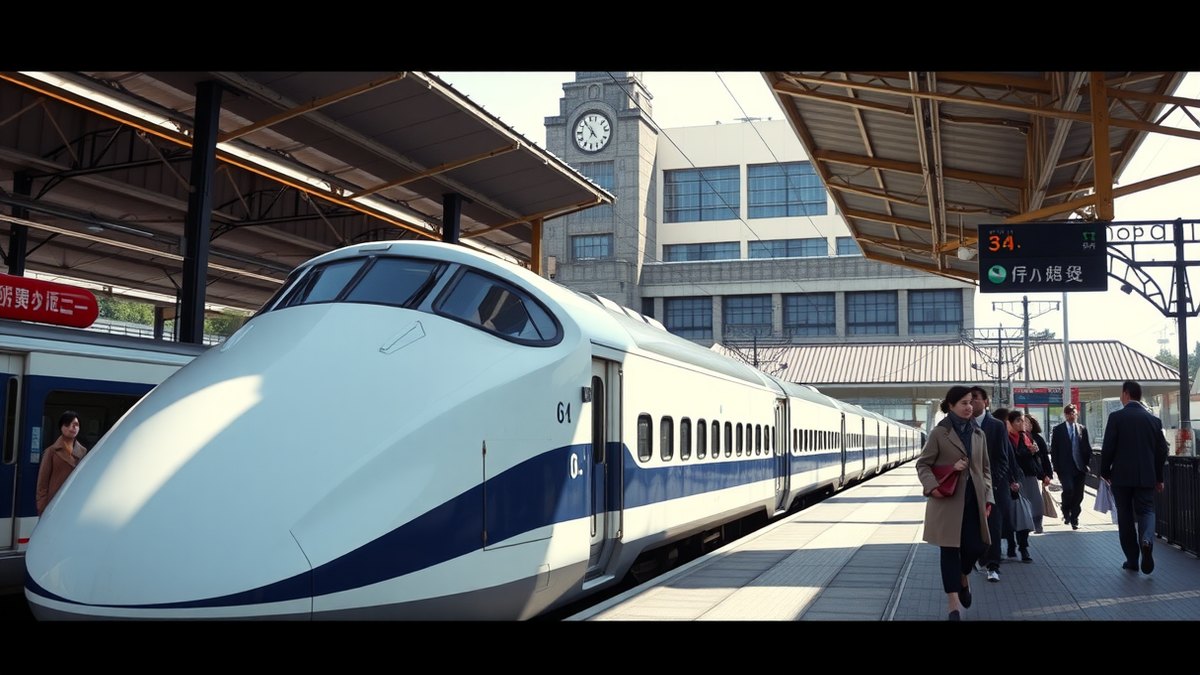
Japan's constitution is the highest law of the land. American civilian officials wrote most of it during the occupation that followed the Second World War. It was adopted on 3 November 1946 and took effect on 3 May 1947, replacing the Meiji constitution of 1889. It has a preamble and 103 articles in 11 chapters.
It rests on the sovereignty of the people, with the emperor as a symbol of the state, on the renunciation of war, on individual rights and on the ban on state religion. The Meiji constitution gave the emperor supreme political power. Under the 1946 settlement his role in a constitutional monarchy shrinks to "symbol of the state and of the unity of the people". He performs purely ceremonial functions, and sovereignty lies with the people. Article 9 renounces Japan's right to wage war and to maintain armed forces. Even so, the country keeps a de facto army in the form of the Self-Defense Forces and hosts a significant United States military presence. Amending the constitution requires a two-thirds vote in both houses of parliament.
MacArthur changes course
Japan surrendered at the end of the war in 1945 and the country came under occupation. General Douglas MacArthur, supreme commander of the Allied forces, instructed Prime Minister Kijūrō Shidehara to draft a new constitution. Shidehara put a committee of Japanese scholars on the task, but in February 1946 MacArthur changed course and presented a draft prepared under his own supervision.
1 October 1964
The Tokaido Shinkansen, the first line in the network, opened shortly before the Tokyo Olympic Games, which began on 10 October 1964. The route runs 552.6 kilometres and links Tokyo, Yokohama, Nagoya and Osaka, the four largest cities in Japan. The line remains the busiest in the network: in fiscal 2023 it carried 161 million passengers, and more than 6.5 billion since opening.
Before the arrival of high-speed rail, express trains needed about 6 hours and 40 minutes for the Tokyo-Osaka run. After the Shinkansen opened, the Hikari service, stopping only at selected stations, cut the journey to four hours. The Kodama, which stopped at every station, covered the route in five hours. The first Shinkansen trains, the 0 series, ran at speeds of up to 210 kilometres per hour, later raised to 220 kilometres per hour. Construction was financed by a government loan, railway bonds and a low-interest World Bank loan of 80 million dollars. The cost was initially estimated at close to 200 billion yen, but the estimates were too low: the actual cost came to about 380 billion yen. When the budget gap came to light in 1963, Sogō resigned and took responsibility. In 1962 a rolling stock test site, the so-called Kamonomiya Model Section, opened in Odawara.
Records and reach
The Shinkansen network serves most large cities on Honshu and Kyushu and reaches Hakodate on Hokkaido. An extension to Sapporo is under construction and due to open towards the end of fiscal 2038. In 2024 the network recorded 385.9 million passenger journeys. The highest speed recorded on the Shinkansen network for conventional rail is 443 kilometres per hour, set by the class 955 (300X) train in 1996. The L0 series maglev reached 603 kilometres per hour in 2015 on the Yamanashi test line, part of the Chūō Shinkansen. Japan is a difficult country in which to raise speeds: it is exposed to frequent earthquakes.
Sources
2All figures and quotations in this text come from the sources listed below.
Content prepared by the editorial team with AI assistance.
Helen Marsh
Comments
0- No comments yet — be the first.