A Wuhan court granted copyright in an AI image. The US Supreme Court said no
A Chinese court ruled that an image generated by a model can be protected by copyright if the creator controlled the process. Around the same time, the US Supreme Court refused protection for a work a machine made on its own.
 Helen MarshCulture, food and lifestyle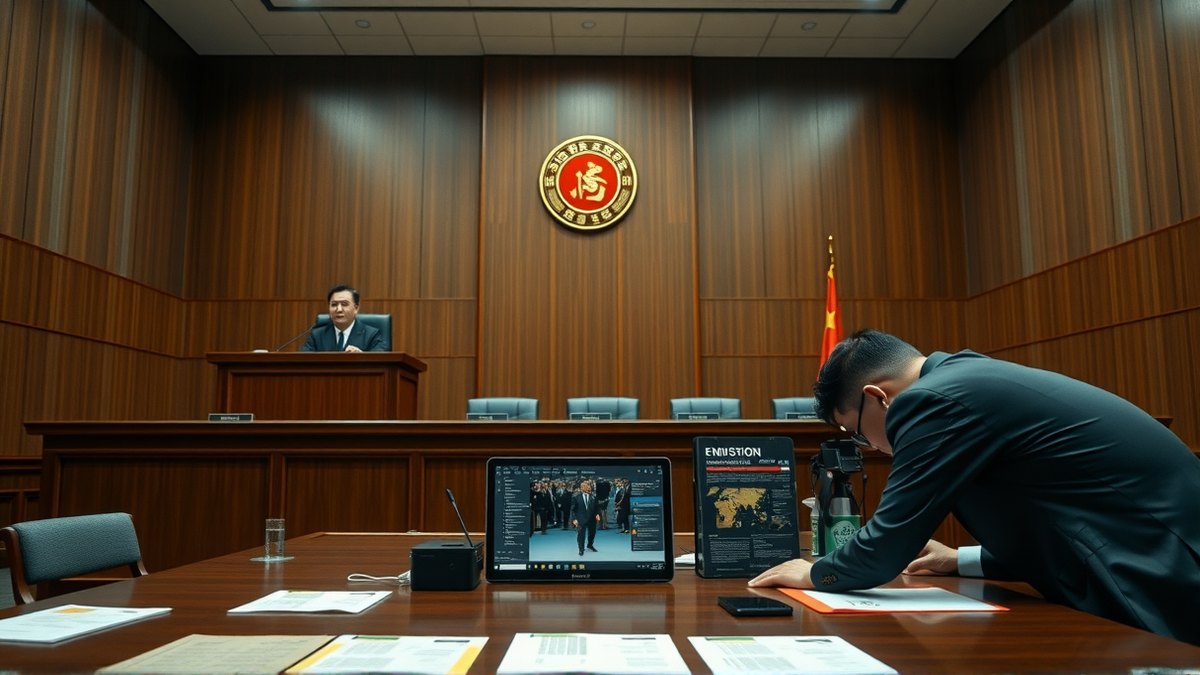
The Wuhan case has become a reference point in Chinese legal practice. Wang, who makes AI-generated content, posted an image on Xiaohongshu on 17 May 2024. He had made it in an app he described only as "a certain AI". The post drew 35,000 likes, more than 6,000 saves and 660 comments. A month later Wang found an identical graphic in an advertisement for an AI painting training camp. A Wuhan company had published it on its Douyin account to promote its own courses, without his permission. Wang registered the rights to the work on 26 May and sued the company.
Control and prediction
The court in Wuhan's Donghu new technology development zone held that an image generated with AIGC software is no different from an ordinary photograph or painting. It belongs to the field of art and has a concrete form of expression, so copyright protects it. The key distinction was this: the law protects creative expression, not the idea itself. Wang devised the composition, the court found. He wrote and modified text prompts and tuned the parameters step by step, keeping "a certain degree of control and prediction" over the result. The process reflected his concept, his technique and his aesthetic choices, which is to say his individual expression as a creator. The image was the fruit of his intellectual work, and Wang was its author and rights holder. The company that used the graphic commercially without permission infringed the right to make the work available online. The court awarded 4,000 yuan in damages plus reimbursement of reasonable costs. Neither party appealed, and the defendant company complied voluntarily. It was the first such case in Wuhan.
Washington: a human being as a necessary condition
The United States went in a completely different direction. On 2 March 2026 the Supreme Court declined to hear the appeal of computer scientist Stephen Thaler. He had been refused registration of copyright in a visual artwork that his DABUS system created on its own. The image is titled "A Recent Entrance to Paradise" and shows railway tracks leading to an entrance surrounded by green and purple vegetation. Thaler filed the application in 2018, and the US Copyright Office rejected it in 2022, holding that a creative work must have a "human author". A federal judge in 2023 called human authorship the "cornerstone" of protection, and the DC appeals court upheld that position in 2025. Thaler's lawyers argued that the case was of "critical importance" in the era of generative AI and that the refusal would affect deployments in the creative industry.
The two sides argue from different premises. The Copyright Office has also refused protection to authors of Midjourney images, but those authors claimed they had co-created the work with the AI. Thaler claimed his system creates on its own, and that is precisely why he lost. The Wuhan case shows that protection is possible under the model "a human controls, a machine executes". The American one shows the price of claiming the opposite.
Sources
2All figures and quotations in this text come from the sources listed below.
Content prepared by the editorial team with AI assistance.
Helen Marsh
Comments
0- No comments yet — be the first.