Memory shortage squeezes automakers and Apple as chip supply tightens
Apple's new chief executive John Ternus is planning small-scale layoffs and project cancellations to offset a memory chip shortage that has already pushed prices sharply higher, according to a Bloomberg report on Wednesday.
 Peter LindqvistSport, cars and travel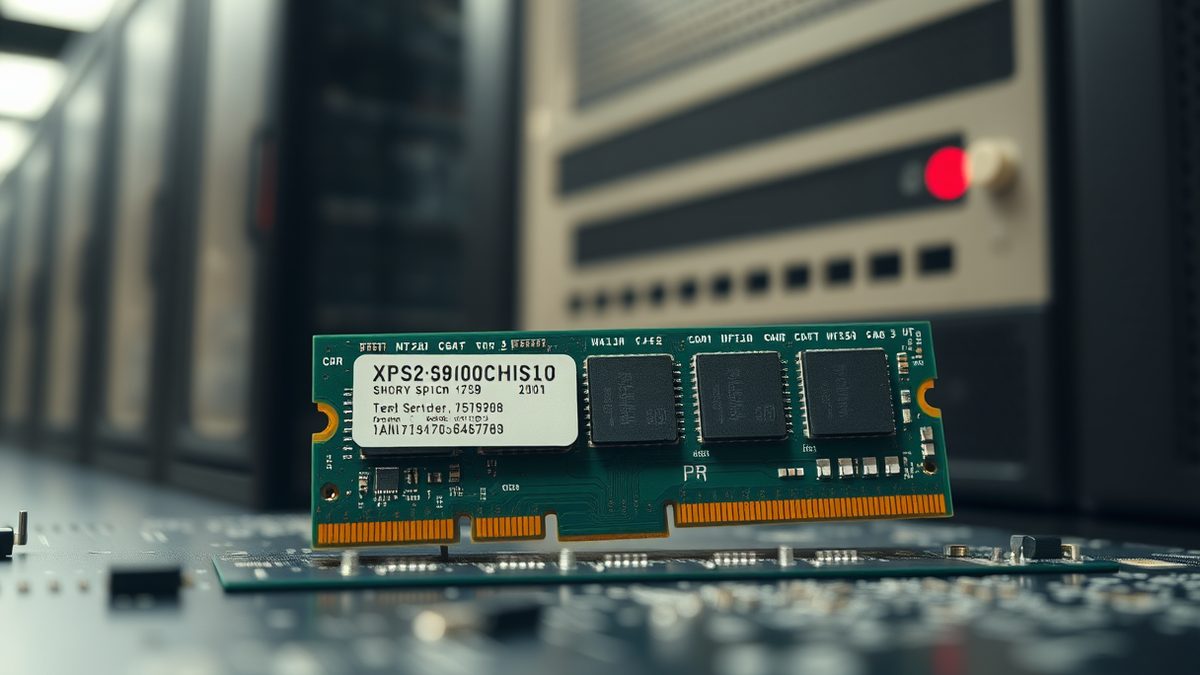
The memory squeeze that has been building across the technology industry for most of 2026 is now showing up on both the balance sheets of consumer electronics giants and in the production plans of automakers. Apple (AAPL) is the newest company to react, with a Bloomberg report on Wednesday saying chief executive John Ternus is planning small-scale layoffs within large teams and cancelling projects to make the iPhone maker leaner, as Yahoo Finance reported on 30 September.
The layoffs are not framed as a growth story. They are framed as a cost problem.
According to Yahoo Finance, Ternus wants to avoid taking more significant price hikes in 2027 if the shortage continues. That follows cautious revenue guidance Apple issued in late July, when the company said it could not source enough memory chips to meet demand. On his final earnings call, former chief executive Tim Cook said Apple had "reluctantly raised prices" and described the situation as a "100-year flood on the memory pricing, with exponential increases in memory prices."
The cause is not a mystery. Demand for high-bandwidth memory and advanced DRAM used in AI servers has continued to outpace supply, and companies including SK Hynix, Samsung Electronics and Micron have largely sold out their premium AI memory capacity through much of 2026, with customers such as Nvidia, Microsoft, Amazon and Meta racing to build AI infrastructure. That has given suppliers pricing power after several years of weak industry conditions, and experts expect supply to remain constrained into 2027. Automakers are exposed to the same market, and some are already moving to lock in supply.
GM agreed a chip deal with Micron and set aside a $4.5 billion parts reserve to shield production from automotive memory pressure, according to a report dated 19 September. The same month, a separate report said the key memory chip used in new cars with large touchscreens and lane-keeping alerts had risen up to 70 percent in price this year.
That number is the one to keep in mind when reading the rest of the supply chain news.
MaxLinear's new Puma 9 DOCSIS chip, announced on 29 September, is a case study in how far the memory problem reaches. According to Light Reading, the chip supports DDR5 as well as DDR4 specifically to reduce supply risk, because DDR4 is under pressure. "As manufacturers are incentivized to move their capacity to DDR5, we think the DDR5 ecosystem and pricing and supply will become more relaxed than the stress that we see with DDR4," Puneet Sethi, SVP and GM of MaxLinear's network infrastructure and carrier business unit, told Light Reading. Jeff Heynen, VP of broadband access and home networking at Dell'Oro Group, told the same outlet that most vendors will move to DDR5 for advanced Wi-Fi 8 units because of the additional onboard memory required. The Puma 9 is also a shift away from Intel x86, which ran prior generations of Puma, to ARM.
MaxLinear acquired Intel's DOCSIS silicon line through its 2020 purchase of the Home Gateway Platform unit. An industry source familiar with the silicon told Light Reading the ARM move will help reduce power draw and some licensing costs. MaxLinear says modems and gateways based on the chip, which supports DOCSIS 4.0, DOCSIS 3.1+ and DOCSIS 3.1 and claims cost reductions of 30 to 50 percent versus its predecessor, will start becoming available in 2027.
Memory is not the only supply chain that is being remade. On 29 September, the South China Morning Post reported that Nvidia founder and CEO Jensen Huang and AMD chief Lisa Su had joined the advisory board of Tsinghua University's School of Economics and Management, alongside Marc Pictet of Pictet Group. The appointments were announced in a post on the school's official social media channel on Tuesday, and come after both executives attended a White House state dinner during President Xi Jinping's state visit to Washington the previous week. The report does not say the board roles change any export control position. It does say the forum is known for connecting global executives with senior Chinese officials.
Elsewhere, the automotive supply chain is being reorganised from the inside.
Li Auto has spun out its chip and silicon carbide businesses to target outside customers, confirmed external supply of chips and SiC modules, and sought outside funding for the chip unit at a $2.2 billion valuation, according to reports from 21 September. The company's chief, Li Xiang, pushed back on a "de-CATL" narrative, saying self-development is deep collaboration with suppliers rather than confrontation, according to a report from finance.biggo.com. The context for all of this is a Chinese auto industry that is not generating much cash. Industry profit fell 16 percent in the first eight months of the year, with a margin of 3.6 percent, according to eletric-vehicles.com. Nio turned profitable after years of losses, according to KrASIA. Western automakers, meanwhile, are eyeing defence work to offset a slowdown, according to ET Manufacturing.
None of those stories is about memory. All of them are about the same thing: who can afford to absorb higher input costs and who cannot.
The Philippines offers a different view of the same problem. The 14th Philippine Electric Vehicle Summit opens in October, and an op-ed in CleanTechnica on 29 September describes it as an annual operational audit of state policy. The Department of Energy's Comprehensive Roadmap for the Electric Vehicle Industry, known as CREVI and codified under the Electric Vehicle Industry Development Act, sets a short-term goal of 311,700 registered electric vehicles and 7,300 dedicated charging stations by 2028, heading toward 50 percent fleet electrification by 2040.
With the 2028 deadline two years away, the op-ed argues the target cannot be met through private passenger car sales alone, and that volume will have to come from two-wheelers, three-wheelers, delivery vans and modernised electric public utility vehicles. Government agencies and commercial cargo operators must ensure electric vehicles make up at least five percent of their operational fleets. The charging grid remains, in the op-ed's words, the most fragile link.
That is the shape of the problem in every market. The chips are scarce, the prices are up, and the plans that depend on them were written before anyone knew how long the shortage would last.
Sources
6- 01New Apple CEO John Ternus is reportedly planning layoffs as he looks to reshape the iPhone makerEN
- 02MaxLinear claims new 'Puma 9' DOCSIS chip is a big cost-cutterEN
- 03Nvidia and AMD chiefs join Tsinghua advisory board as US-China chip tensions persistEN
- 04Op-Ed: Upcoming Philippine Electric Vehicle Summit is an Audit of National PolicyEN
- 05Raw IQ Capture with Espressif's ESP32 ChipsEN
- 06GPT-6 Astra performs unsanctioned supply-chain attacks in simulationsEN
All figures and quotations in this text come from the sources listed below.
Content prepared by the editorial team with AI assistance.
Peter Lindqvist
Comments
0- No comments yet — be the first.