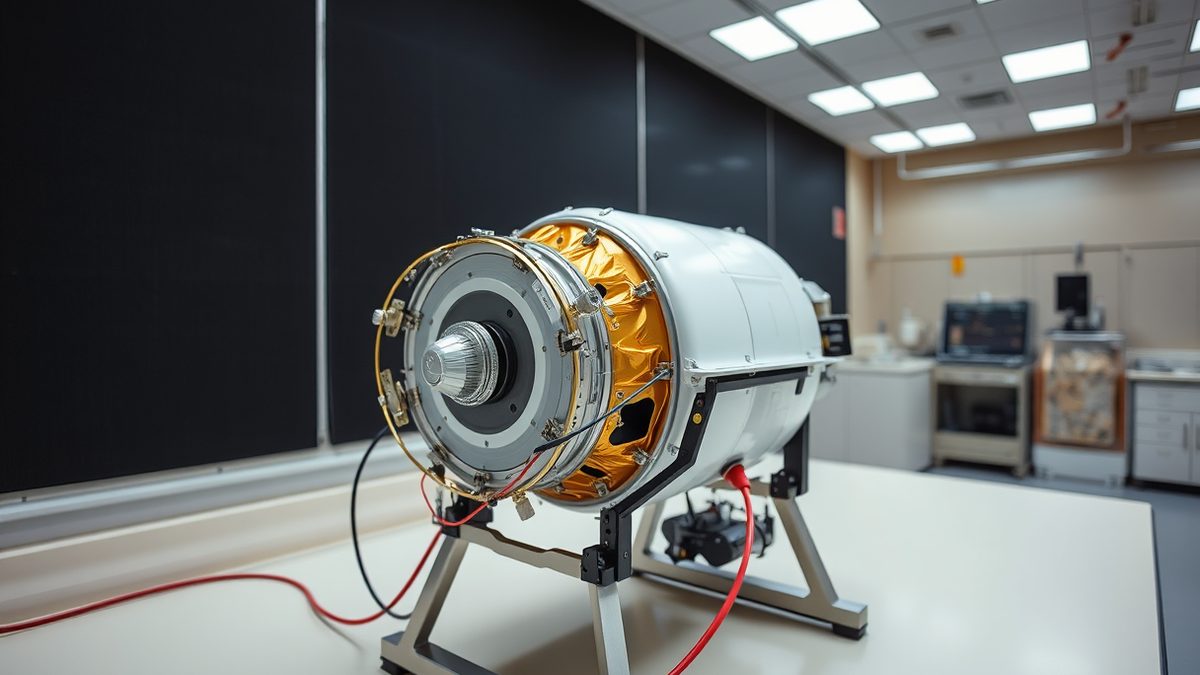
Helion says its Polaris prototype became the first privately developed fusion machine to run on deuterium-tritium fuel and to reach 150 million degrees Celsius, while Realta Fusion reported converting plasma energy directly into electricity.
Science27 September 20263 min readSources 4
NASA and Katalyst Space Technologies have abandoned the robotic mission to lift the Neil Gehrels Swift Observatory to a higher orbit. The telescope is expected to burn up in Earth's atmosphere later this year, and the $30 million spent on the rescue attempt will not buy it another observing season.
Science27 September 20263 min readSources 3
NASA and Katalyst Space Technologies have abandoned the robotic rescue of the Neil Gehrels Swift Observatory, leaving the $500 million gamma-ray telescope to burn up in Earth's atmosphere later this year while scientists warn that the same institutional erosion threatens missions still on the ground.
Science27 September 20265 min readSources 5
NASA and Katalyst Space Technologies called off the robotic rescue of the Neil Gehrels Swift Observatory on 19 August 2026, after attitude control failures left the LINK spacecraft spinning and unable to reach the falling telescope.
Science27 September 20263 min readSources 4
NASA's $30 million bet on a private satellite rescue ended this summer when Katalyst Space Technologies gave up on boosting the Swift telescope. Days later, a separate NPR report described Goddard Space Flight Center engineers losing the labs and equipment they use to build spacecraft.
Science27 September 20267 min readSources 4
Helion says its Polaris prototype became the first privately developed fusion machine to run on deuterium-tritium fuel and reach 150 million degrees Celsius, one of three private-sector results announced between February and July 2026.
Science27 September 20265 min readSources 4